FemTech Examples Across Every Stage of the Reproductive Lifespan
FemTech spans tracking apps, devices, and diagnostics across reproductive stages.

FemTech is not one product category. It is a label, coined by Ida Tin in 2016, that covers software, devices, and services built around women's health: fertility, menstruation, pregnancy, menopause, mental health, and contraception all sit under the same umbrella term⟦c3⟧. The label exists because a gap did: historically, only 4% of biopharma research and development dollars went toward conditions specific to women, figures tracked by Silicon Valley Bank show, and the entire field grew out of that void⟦c4⟧. The number means the market wasn't built by incumbents defending share, but was built to fill a hole nobody else was filling. It means the market wasn't built by incumbents defending share, it was built to fill a hole nobody else was filling.
The most useful way to look at FemTech isn't by product type (app versus wearable versus diagnostic), but by the life stage it serves ⟦c1⟧. A menstrual tracking app and a postpartum telehealth platform both get filed under "FemTech," but they solve entirely different problems, for different bodies, under different regulatory regimes⟦c5⟧. Menstruation, contraception, fertility, pregnancy, postpartum, and menopause each carry their own biology, their own clinical blind spots, and their own social baggage. Sorting the field this way, stage by stage, shows where real unmet need is getting addressed and where it still isn't.
The scale involved is no longer modest. By late 2025, the field had shifted into something closer to a full clinical sector, made up of regulated medical devices, AI-driven diagnostics, and increasingly sophisticated fertility technology, rather than a collection of consumer wellness apps⟦c7⟧. What follows walks through that arc in order: menstrual health, contraception, fertility and assisted reproduction, pregnancy and prenatal care, postpartum and lactation, and finally menopause⟦c8⟧. Market scale signals how far the field has come: estimates diverge by methodology, with one source valuing the global market at USD 66.2 billion in 2025 and another at USD 45.58 billion in the same year, establishing that even the lower bound represents a multibillion-dollar clinical category, not a niche ⟦c6⟧.
Menstrual health: FemTech's origin point and its largest current product density
Menstruation is where FemTech's origin story actually starts, and for a specific reason: it was excluded from research for decades ⟦c1⟧. Conditions like endometriosis, PCOS, and severe PMS went chronically underdiagnosed and undertreated, and that research gap itself is what created the commercial opening⟦c9⟧. Where medicine left a void, technology moved in first with tracking, then with symptom relief, then with diagnostics.
Consumer tracking apps are still the dominant layer. But scale cuts both ways. The case illustrates the tension that runs through the entire category: the same data that makes personalization useful is the data users least want floating around unsupervised. Clue, founded back in 2012 and one of the earliest apps in the space, has held onto a strong position too, with over 10 million users across 190 countries, largely on the strength of cycle tracking and contraceptive support⟦c12⟧.
A second layer has grown up around pain, not prediction. The Myoovi Kit uses TENS technology to block pain signals at the nerve level, aimed specifically at period pain and endometriosis⟦c13⟧. Livia, an FDA-cleared wearable, does something similar through patented SmartWave micro-pulse technology⟦c14⟧. Other devices, including OhmBody and Jovi, occupy the same pain-interruption space⟦c16⟧.
A third layer is newer and arguably more interesting: diagnostics drawn straight from menstrual blood. That's a genuine shift, from simply tracking a cycle to reading biomarkers out of it. Put together, the menstrual stage now spans three distinct value propositions: tracking and prediction through apps, symptom management through pain devices, and biomarker diagnostics through smart period products⟦c18⟧. One life stage, three separate technology layers, because the underlying research gap was large enough to support all three at once ⟦c18⟧. Flo Health, with roughly 70 million users, leads the consumer app space in a "winner-takes-most" dynamic driven by the data advantage scale provides for AI personalization ⟦c10⟧. Flo, Google, and Flurry settled a $59.5M class action in 2025 for sharing reproductive health data without user consent, with Flo's share at $8M, Google's at $48M, and Flurry's at $3.5M, surfacing the tension between personalization and privacy that runs through the entire category ⟦c11⟧. Samphire, founded in 2021 in London with $7.3M in total funding including a $5M Seed round in June 2025, developed Nettle, described as the first at-home brain stimulation device for managing both chronic pain and mood symptoms related to PMS and period pain, and is undergoing clinical trials in PMDD and endometriosis populations ⟦c15⟧. One London-based startup, founded in 2020 with £7.6m in total funding including a £6.8m Seed round in November 2025, measures health data directly from period blood via sustainable period products paired with a mobile app, with AI image analysis providing non-invasive menstrual health insights, representing a move toward diagnostics rather than tracking alone ⟦c17⟧.
Contraception: how digital and device-based options are expanding the choice set
Natural Cycles' history maps the arc of an entire sub-industry⟦c19⟧. It became the first birth control app to receive FDA De Novo clearance, back in 2018⟦c20⟧. Since then, the clearances have piled up in a fairly telling sequence: Oura Ring integration cleared in 2021 and launched in August 2022, Apple Watch integration added in 2023, a 510(k) clearance in 2024 that included a Predetermined Change Control Plan for future hardware additions, OTC and by-prescription clearance in 2025, and, most recently, a sixth clearance announced in July 2026 for a next-generation algorithm, called NC°, that combines statistical modeling with machine learning trained on tens of millions of real-world fertility data points⟦c21⟧⟦c22⟧. Effectiveness is 98% with perfect use and 93% with typical use, putting it squarely in the same conversation as combined oral contraceptives⟦c23⟧. That's not a footnote. It means an algorithm-driven, hormone-free method is now being discussed in the same clinical breath as the pill.
Device-based innovation is moving too, just on a different axis. Femasys received a CE mark under EU MDR in March 2025 for its FemBloc delivery system, and the complete FemBloc system earned full CE mark approval that June, described as the first in-office polymer-based tubal occlusion device⟦c24⟧. In plain terms: permanent contraception without surgery.
Access, meanwhile, is being solved through telehealth rather than through new methods. Nurx and The Pill Club deliver prescription contraception and STI test kits through app-based platforms, which addresses who can get birth control rather than inventing a new form of it⟦c25⟧. Ferly and Rosy push the definition further outward, into sexual wellness and trauma recovery, which stretches "contraceptive care" into something closer to sexual health broadly⟦c26⟧.
None of this happens in a vacuum, though. After the Dobbs v ⟦c27⟧. Jackson decision in 2022, menstrual and reproductive health data turned into a legal liability in some US states, with law enforcement agencies known to pursue such data through subpoena⟦c27⟧⟦c28⟧. The Flo settlement mentioned earlier belongs squarely in this conversation too: data collected for something as ordinary as period tracking doubles as contraceptive and reproductive-intent data, and that data becomes legally sensitive post-Dobbs⟦c29⟧. Privacy architecture has become a competitive differentiator in this category, the same way effectiveness rates or app design used to be. It's a competitive differentiator, the same way effectiveness rates or app design used to be⟦c30⟧.
Fertility and assisted reproduction: where AI, hardware, and clinical services are converging
At-home hormone monitoring has quietly gotten close to clinical grade. The Mira Fertility Tracker measures fertility hormone concentrations in urine using a reusable analyzer paired with disposable test wands, delivering data that used to require a blood draw⟦c31⟧. OvuSense takes a different physical approach, using an intravaginal sensor to track core body temperature for ovulation prediction⟦c32⟧.
Wearables built for sleep and recovery are getting pulled into fertility use cases almost by accident. A 2024 systematic review published in the Journal of Medical Internet Research found that wearables can reliably track skin temperature, heart rate variability, and sleep cycles well enough to assess ovulation and cycle phase under real-world conditions, not just in a lab⟦c32⟧. Oura Health is expanding its diagnostic reach to catch hormonal shifts and early physiological change, building on a device that was originally known for sleep tracking⟦c33⟧. Natural Cycles' own integrations with Oura Ring in 2021 and Apple Watch in 2023 are probably the cleanest example of this convergence, wearable hardware and fertility software growing into each other⟦c34⟧.
AI is also creeping into clinical decision-making itself, not just consumer tracking. FertilAI, based in Israel, built an AI platform called Fertilane that supports clinicians all the way from ovulation tracking through IVF, with the goal of cutting unnecessary testing and sharpening the timing of treatment⟦c35⟧. Natural Cycles' sixth FDA clearance in July 2026, discussed earlier, belongs in this same story: machine learning trained on real-world fertility data is the same trajectory, just applied on the contraceptive side rather than the conception side⟦c36⟧.
IVF itself is getting automated at the lab bench. Other companies working the reproductive therapeutics and uterine health angle, Gameto, ReproNovo, Conceivable Life Sciences, and Rejoni, round out just how wide this corner of the field has gotten⟦c39⟧.
PCOS deserves its own mention here, since it sits right at the intersection of fertility and chronic hormonal disease.
Distribution, finally, is increasingly running through employers rather than direct-to-consumer channels. That's not a small trend. In 2024, 40% of US employers offered fertility coverage, and 75% said they planned to deepen women's health benefits further⟦c43⟧. Employer-sponsored platforms look set to absorb a growing share of demand at this stage, simply because the benefits infrastructure is already there. Fertilis, based in Australia, has developed a patented micro-3D printed cradle that automatically adjusts the nutritive composition of solutions bathing IVF embryos, bringing automation to the embryology lab level ⟦c37⟧. Overture Life, based in Spain with $65.6M in funding, is working toward an "embryology lab in a box" concept to make IVF more accessible ⟦c38⟧. Solence raised €1.6M in seed funding in July 2025 to advance its AI-powered digital therapeutic specifically for PCOS ⟦c41⟧. Maven Clinic, with $417.1M in total funding, dominates the employer-benefit fertility platform space, reported 400% growth in its Maternity & Newborn Care program, and acquired UK-based Naytal in March 2023 to integrate personalized fertility and pregnancy planning ⟦c42⟧.
Pregnancy and prenatal care: remote monitoring moves from hospital to home
Prenatal care used to mean showing up, repeatedly, in person. Remote monitoring technology is rewriting that model for both low-risk and high-risk pregnancies, letting a meaningful share of routine monitoring happen at home instead of in a waiting room.
Three broad categories define the stage ⟦c18⟧. Remote fetal monitoring devices track fetal heartbeat and contractions continuously or at intervals, outside a clinical setting. Prenatal apps handle symptom tracking, appointment scheduling, education, and communication with a care team. AI-driven ultrasound and diagnostic tools are pushing imaging earlier and into settings that previously lacked the specialists to read it. Bloomlife makes a prenatal wearable built for this kind of monitoring. HeraMED runs a remote prenatal monitoring platform along similar lines⟦c44⟧. Nuvo Group offers a connected maternity platform and is counted among the major players in this market⟦c44⟧. Sera Prognostics focuses on predictive diagnostics, specifically around preterm birth risk⟦c45⟧. iSono Health has built a portable, AI-powered breast ultrasound device that overlaps prenatal monitoring with general health screening⟦c46⟧.
Policy is nudging things along too. The UK's NHS Long-Term Plan committed to giving 100,000 women access to a digital maternity record by March 2020⟦c47⟧. Mexico's national health institute, IMSS, piloted digital prenatal care across multiple states in 2024⟦c48⟧. Maven Clinic's reach extends into this stage as well, its platform spans fertility through maternity, and the Naytal acquisition specifically added pregnancy planning tools, reinforcing employer benefits as a growing route into prenatal digital care⟦c49⟧.
Pregnancy commands the largest share of attention of any stage covered here. Straits Research reported that the pregnancy and nursing care segment held the largest application share of the entire FemTech market⟦c50⟧. Of every stage covered here, this is the one drawing the most commercial weight, by a clear margin.
Postpartum and lactation: the stage with the most care gaps and emerging tech responses
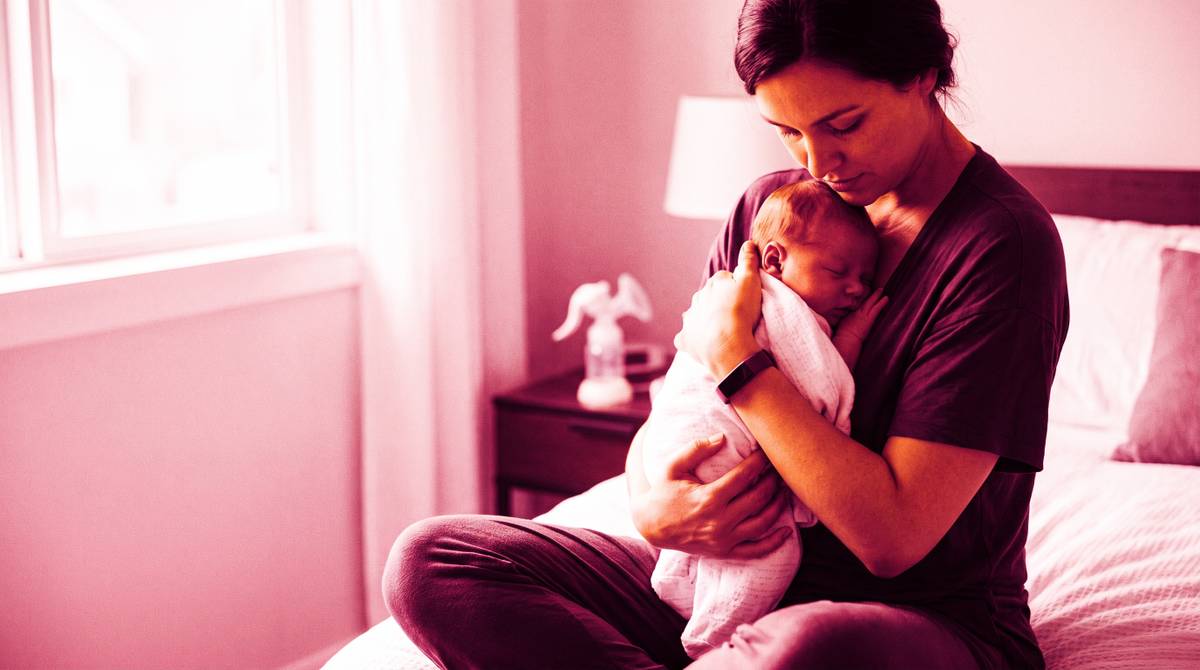
Postpartum care, in most health systems, gets compressed into a single follow-up visit weeks after birth. Physical recovery, lactation support, and perinatal mental health are three separate needs, and a single appointment cannot realistically cover any of them well ⟦c18⟧.
Pelvic floor recovery has become one of the more mature product categories addressing the physical side. Elvie makes a smart pelvic floor trainer and sits among the top five market players by share in 2025, a group that collectively holds 35% of the market according to Global Market Insights⟦c51⟧. Flyte, from Pelvital, is a pelvic floor rehabilitation device also counted among the major players in this space⟦c52⟧. Perifit offers an app-connected trainer along the same lines.
Lactation technology has moved from hospital-grade equipment to something closer to consumer hardware. The Willow Pump Company makes a wearable, in-bra breast pump, a real departure from the bulky clinical pumps that used to be the only option⟦c53⟧. LactApp Women's Health offers personalized breastfeeding guidance through an app, filling in the education gap that a single postpartum visit can't cover⟦c54⟧.
Mental health remains the widest gap of all. Postpartum depression and perinatal anxiety count among the most common complications of childbirth, yet they remain among the least addressed by existing health infrastructure, technological or otherwise⟦c55⟧. FemTech platforms building in telehealth and CBT-based mental health tools are starting to close that gap, though slowly ⟦c55⟧. Maven Clinic's inclusion of postpartum mental health support inside its broader maternity benefit is a useful example of what a platform looks like when it doesn't just drop a patient after delivery⟦c56⟧. That continuity is really the point of this whole stage: FemTech's value here isn't only new technology, it's whether a platform can carry a woman's health record and provider relationship across several stages at once, rather than solving one problem and disappearing⟦c57⟧. Platforms built that way are structurally different from single-purpose point solutions, and that difference is likely to matter more as the market matures.
Menopause and midlife health: the stage where FemTech investment is accelerating fastest
Something specific is driving the money into this stage right now. Women who tracked their cycles on an app in their twenties, then used fertility platforms in their thirties, are now moving into perimenopause as a genuinely tech-literate, commercially comfortable cohort, and that combination is generating demand that simply didn't exist at this scale before⟦c58⟧. It's less a new problem than an old problem meeting a newly receptive audience.
Symptom tracking and hormone monitoring tools, largely adapted from cycle-tracking apps, are being repurposed to log hot flashes, sleep disruption, mood shifts, and cognitive symptoms tied to the menopause transition. Telehealth menopause care platforms are connecting women directly to clinicians for hormone replacement therapy evaluation and ongoing management, a response to a specialist shortage that leaves many women without anywhere local to turn for informed care⟦c59⟧. Given the funding pattern the rest of this piece traces, from menstruation through fertility through pregnancy, it would be a genuine surprise if menopause didn't end up following the same path: consumer tracking first, then hardware, then diagnostics. The cohort is already there and already paying attention. The products, for once, are arriving to meet them rather than the other way around.