Taboo Topics Limiting FemTech Advertising on Major Platforms
Tech platforms censor women's health ads while approving male equivalents.
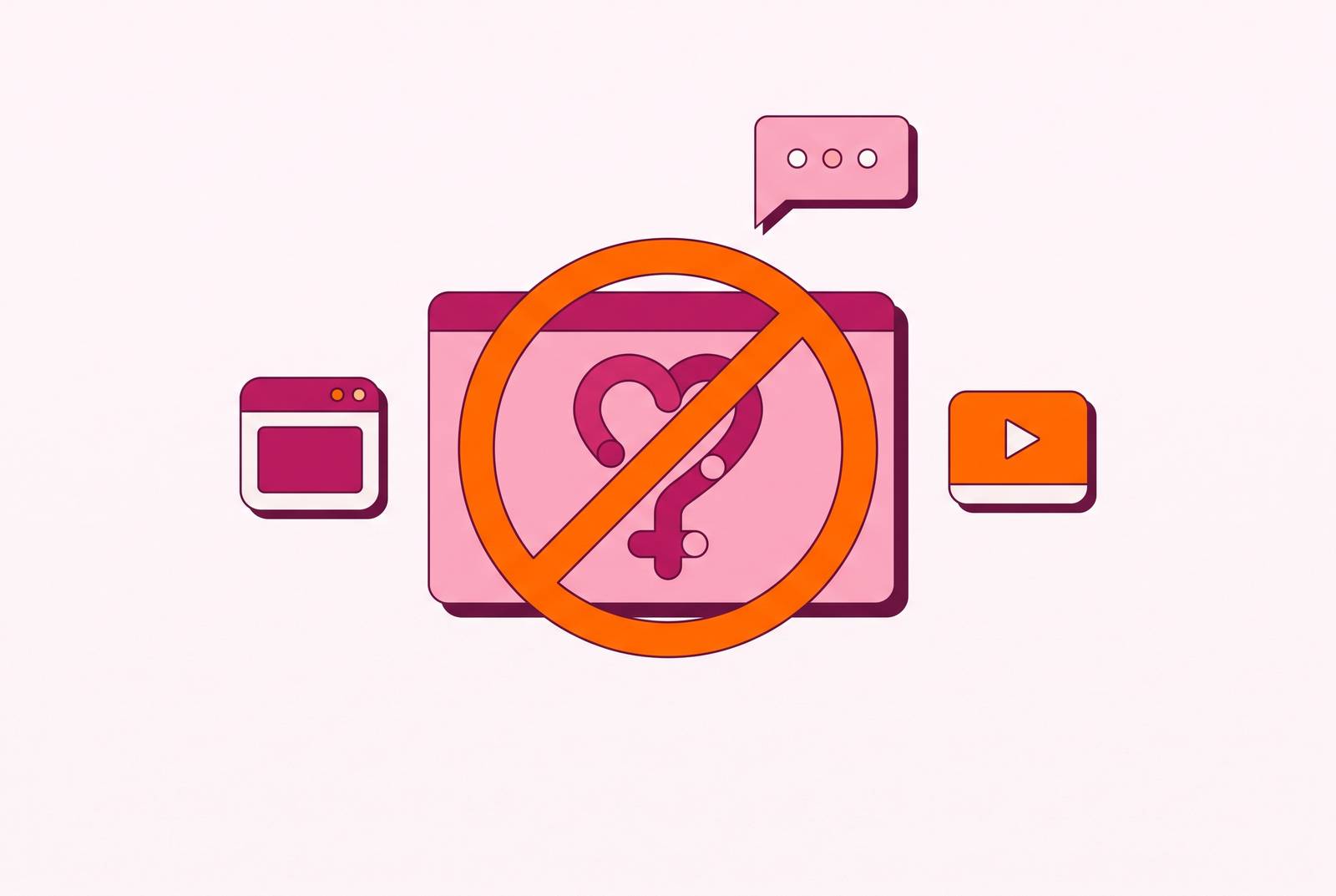
Femtech is a $66.2 billion global market in 2025, on track to hit $255.5 billion by 2035, according to Global Market Insights Inc. Meta, Google, Amazon, TikTok, and LinkedIn keep flagging basic women's health content, menopause, menstruation, fertility, as unsafe or adult in nature, and the platforms are wrong to treat clinical language as a safety risk. We’ll break down the gap’s cause, its real size, and the work-arounds femtech marketers use now.
The term Femtech, coined in 2016, is relatively new and encompasses digital products, software, and services focused on women's health, including maternal care, menstrual tracking, fertility support, menopause management, and contraception. According to Fortune Business Insights, North America accounts for 54.40% of that market in 2025. Demand and funding are both strong.
Companies can't reliably advertise this stuff, since the usual channels still act like searches for period pain relief or menopause support are things to hide.
What the platforms say they allow versus what their systems actually do
On the books, Meta’s rules don’t raise red flags. Ads promoting sexual and reproductive health or wellness, such as birth control and condoms, are allowed by the company if they highlight health, not pleasure or enhancement, and target those 18 and older. Taken at face value, it seems pretty fair.
The Center for Intimacy Justice (CIJ) says Meta's ad review system in practice isn't generous. CIJ has charged Meta with "unfair and deceptive trade practices," saying the company says it permits reproductive health ads but keeps rejecting them repeatedly. Following CIJ's initial January 2022 report, Meta updated its Adult Products & Services and Adult Nudity policies, including clearer examples of acceptable content. CIJ's later study showed ads kept getting denied, including those with Meta's exact approved language.
The problem is in how rules are enforced, not the rules themselves, and that difference is more important than it might seem. Systems that auto-moderate "adult content" work by pattern matching, not like doctors. A system designed to detect nudity can't distinguish between a pelvic floor anatomy diagram and an actual nude image, so they're lumped together. Femtech Insider, a B2B outlet that covers women's health innovation as a news beat rather than a product category, has had its own editorial content marked unsafe by ad networks citing Google's Publisher Restrictions. Content meant to fight stigma on these topics keeps being grouped with the very stuff it opposes.
The real obstacle was never the written rules. The real problem lies in the secret review system that outsiders can't access or check.
Which topics trigger rejection across which platforms
Each big platform handles this issue differently, and those differences prove the rejections aren't just random. Its pattern points at anatomy, not actual risk.
On Meta, documented rejections and account suspensions cover menopause, pelvic pain, pregnancy, postpartum care, menstrual health, fertility, and sexual wellness, almost always filed under "adult content." Google isn't much better: Daye, a gynaecological health company, had an ad pulled under Google's Adult Nudity and Sexual Activity policy for showing a pregnant woman and using the word "vaginal."
Amazon has its own version. Bea Fertility spent months building Prime-rated seller status, collecting verified reviews, and assembling A+ content, only to have its listing rejected because the description used the words "vagina" and "vaginal canal." The word "semen," describing the other half of the same reproductive process on the same listing, was not flagged. Bea eventually swapped "vagina" for "birth canal," then pulled its products off Amazon entirely at the end of January 2025.
LinkedIn, which rarely deals with adult content, blocked Aquafit Intimate's World Menopause Day post, apologized for the nudity error, but blocked it again when reposted. Later posts from the same company covering endometriosis, postpartum recovery, and vaginal dysbiosis were removed as "illegal products and services," a category that fits a menopause supplement about as well as a square peg fits a round hole. TikTok blocks any ad that mentions "intimate" body parts, a strange rule for an industry built on them, and hides posts on periods, fertility, or pregnancy as "sensitive." YouTube pulls ad money from reproductive health clips for the same reason Meta nixes the ads, and Instagram buries those posts too.
The same trigger words consistently appear on all five platforms: vagina, clitoris, vaginal canal. Anatomically correct, medically standard, and apparently radioactive to a filter. The same platforms and policies approve male-anatomy terms without any problems. CensHERship has found cases where medically accurate, expert-led content on menopause and libido is labeled "political," leaving us to wonder what "political" even means in this context.
What the data shows about how widespread these rejections are
CIJ's initial report from January 2022 looked at 60 firms across three years. Every single one had ads rejected on Facebook, Instagram, or both. Accounts were suspended for roughly half at some point. Of the 60 companies studied, 59 were founded or led by at least one woman, in some cases alongside a non-binary founder.
Any real content-moderation system should flag some innocent content by mistake alongside the rest it lets through. A perfect 60 out of 60 isn't random noise. That's what a structural outcome looks like, the kind that shows up when a filter is doing exactly what it was built to do, just not what anyone said it was built to do.
CIJ's 2025 update looked at 159 groups in over 180 countries: 84% faced Meta ad rejections, 66% on Google, and 64% lost Amazon listings. CensHERship’s 2024 report, based on 95 respondents including brands, creators, medical professionals, charities, and consumers, found 95% faced at least one censorship incident, and 17% reported as many as 10 separate issues across Instagram, Facebook, TikTok, YouTube, X, LinkedIn, and Google.
CIJ’s 2025 report puts yearly losses at $10,000–$1 million per business just from Amazon, and some face up to $5 million from Meta. It's not just companies that sell products that get suppressed. Femtech Insider reports on the sector without selling anything, yet it still gets caught in the same filter, so the femtech information ecosystem suffers just like the commerce side.
How the double standard works in practice
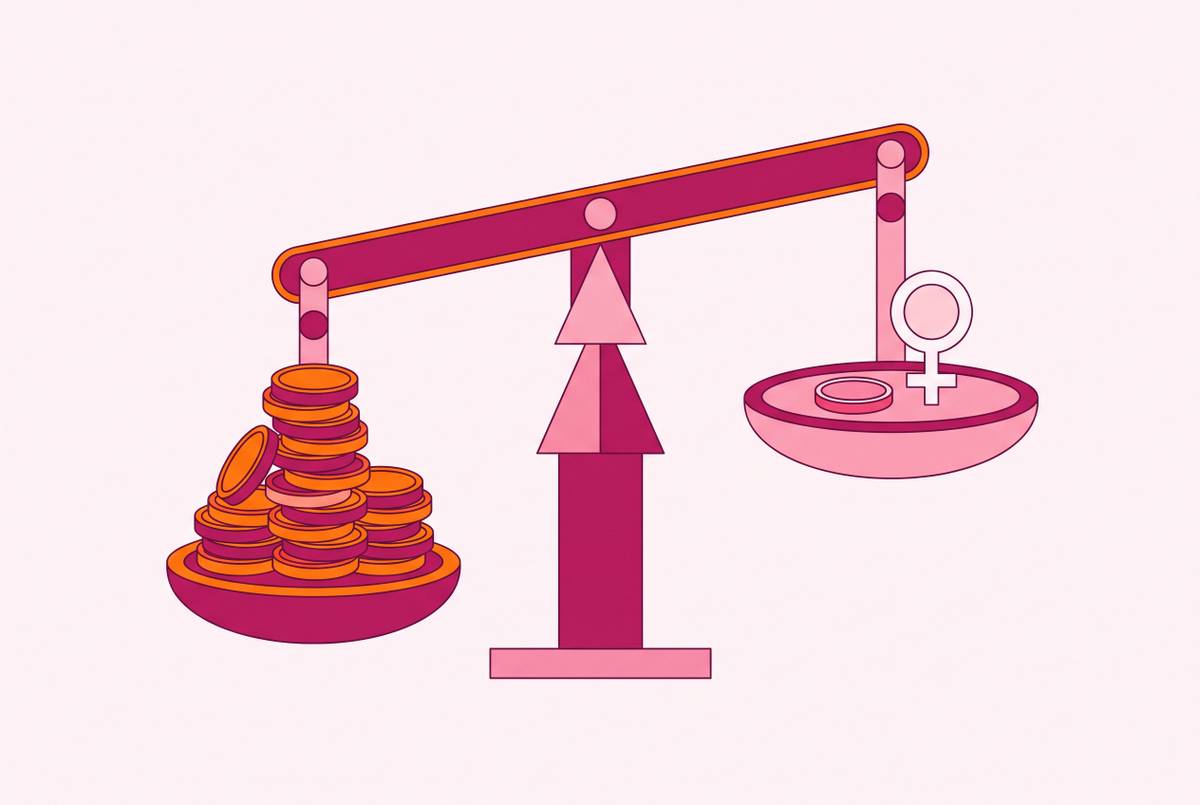
This is where the pattern shifts from seeming like an overly cautious algorithm to revealing a more targeted issue: a double standard, consistently enforced, in a single direction. CIJ discovered that even though women's health ads were being blocked entirely, Meta's system was still showing ads for erectile dysfunction pills touting a "wet hot American summer" and lubricants labeled "made just for men's alone time." Jackie Rotman, CIJ's founder, has been clear about how this appears from the outside: random rules about what’s allowed, used in a way she says has sexist undertones.
Bea Fertility's Amazon listing best shows this imbalance, as it compares the same listing and product on one platform. Same listing, same product, same fertility purpose. "Vagina" and "vaginal canal" were flagged. "Semen" did not. Two biological words for parts of the same reproductive process, but only one set off the filter.
What does this imply for marketers planning campaigns? It means stronger copy won’t solve this, teams calling it a copy issue will keep wasting money on rejected ads. Even if a brand sticks exactly to the guidelines, it might still face rejection since the rules aren't enforced the same way from the start. Products aimed at women’s health are held to tighter enforcement standards than similar ones for men’s health, even within the same healthcare category, often on the same platform, and sometimes on the same day. Wrong words, wrong phrasing, that's not the layer of the machine worth fixing. The classification logic underneath it is.
Inside three companies that fought the system
Despite closely following Meta's guidelines, HANX, a UK sexual health brand co-founded by Dr. Sarah Welsh, was repeatedly penalised: its educational posts were flagged, ads rejected, and in December 2024 its Meta account was suspended for six days without warning. The account was restored only when a co-founder contacted a senior Meta employee via a personal connection, not by using Meta's official appeals process. A call to a friend fixed the problem. Meta’s official process for handling such cases failed completely.
Daye, a gynaecological health company that makes an HPV-screening tampon and runs a virtual period pain clinic, hit the same obstacle in a different way. Google flagged the ad, showing a pregnant woman and the term "vaginal", as breaking its Adult Nudity and Sexual Activity rules. Valentina Milanova, the CEO, says they appealed to Meta and Google many times in 2024 but received unhelpful, generic replies without proper reasons. She thinks this shows a fundamental misunderstanding of women’s and assigned-female-at-birth health issues, built into the design of these systems from the start.
Bea Fertility's case is the final piece. Bea Fertility spent months earning Prime seller status, collecting verified reviews, and creating A+ storefront content, all to build credibility on Amazon. The listing was rejected for using "vagina" and "vaginal canal," but "semen" stayed on the same page. The company swapped in "birth canal," a substitution it openly called insensitive and crass for a product built around fertility. By January 2025, Bea had removed its products from Amazon completely instead of continuing to battle an unchanging filter. CIJ's 2022 report also flagged VFit, Intimate Rose, and Genneve as censored.
Three companies, on three platforms, shared a common problem: they followed the rules, but got rejected anyway, their appeals went nowhere, and they ended up paying a price in lost revenue, with Bea losing an entire sales channel.
How regulatory pressure is beginning to challenge platform behavior
Companies can only keep appealing without response before someone raises the issue to higher authorities. CIJ complained to the FTC in March 2023, then told the public in July, urging regulators to probe Meta's habit of blocking women's health ads. Senators Elizabeth Warren, Amy Klobuchar, Mazie Hirono, and Peter Welch, along with Representative Adam Schiff, signed a public letter supporting the investigation.
In March 2025, six femtech startups (Bea Fertility, Aquafit Intimate, Geen, HANX, Lactapp, and Daye) filed formal complaints with the European Commission under the EU's Digital Services Act. CensHERship teamed up with The Case For Her, a blended-finance fund, to run the campaign, which cites the DSA to fight unfair limits, hidden suppression, and takedowns of women’s health posts. The request is simple: non-discriminatory ad rules and an appeals process that works, not just on paper.
CensHERship's co-founders, Anna O'Sullivan and Clio Wood, put it bluntly: this is a systemic problem needing real reform, not a series of unrelated errors. Since the first round, more companies have come to the group to file more complaints. So far, neither the FTC complaint nor the DSA filings have led to any documented policy changes. Regulation is happening, but it's a slow process that hasn't yet reached a conclusion.
What femtech marketers are doing to reach their audiences despite the restrictions
Waiting for regulators isn't a plan, so the sector builds workarounds now. Flo’s app for periods and fertility shows one way around it: they skipped arguing over rejected ads and teamed up with influencers and doctors, letting creators share their own stories about cycles, fertility, and mental health. This method avoids the paid ad review system altogether, as the content is on the creator's account, not the brand's.
A similar trend is clear across the sector. Brands redirect funds to creator collaborations and content backed by experts, doctors, and health specialists, making it tougher to justify algorithmic misclassification, though it persists. Others invest in their own channels: email newsletters, community sites, and learning hubs, which don't rely on any one platform's weekly changes. Search-driven content marketing, built around the questions people are already typing into Google, captures high-intent traffic without ever touching the paid social ad system at all.
Then there’s the unwanted trade-off: hiding anatomical terms to pass automated checks. The switch Bea Fertility made from "vagina" to "birth canal" best illustrates a brand's credibility loss in a category where clinical precision is key. Each fix eats up extra hours, extra cash, or the two together, more than a simple paid ad would. Femtech marketing teams pay that tax, but competitors selling allergy medication or protein powder don't.
Brands that started early with editorial calendars, expert partnerships, and SEO are facing fewer risks from upcoming platform policy changes than those relying entirely on paid ads. Owned and earned channels aren't a fallback plan here. These options are more reliable, and how platforms act shows why they're worth creating.
Why the brand safety framework itself needs to be rethought
Take a step back and see what the classification system is really doing. Material meant to educate, lessen stigma, and boost health for half the population repeatedly falls into the same "unsafe" category as what it's meant to oppose. That's not a minor calibration error. It's a system that does almost the opposite of its stated purpose, and it should be called out for it, not dismissed as a minor issue.
What did "brand safety" originally aim to achieve? It was designed so advertisers wouldn't appear next to violence, harassment, scams, or other objectionable material. The filters designed to block harmful content accidentally blocked basic terms about half the population's reproductive system. The word "vaginal" is not adjacent to harm. Seeing it that way helps no one. It just stops a menopause supplement or fertility test kit from getting to the person who needs it.
None of the current fixes, improved appeals, DSA complaints, FTC probes, or workaround marketing, reach the root problem. They’re just fixes on a system that wasn’t designed for women’s health, and fixes don’t replace the base. Unless platforms overhaul their classification systems to distinguish clinical terms from adult content as a human moderator would, femtech brands will keep facing marketing hurdles that other health sectors avoid.
Sources
- The femtech companies taking on Big Tech over digital censorship - Health Tech World
- When 'Brand Safety' Undermines Social Progress: The Femtech Paradox - Femtech Insider
- Big Tech Is Silencing Women's Health One Post at a Time
- femtechinsider.com
- Six Women's Health Startups File EU Complaints Against Tech Giants Over Content Censorship - Femtech Insider
- femtechworld.co.uk
- femtechinsider.com
- intimacyjustice.org