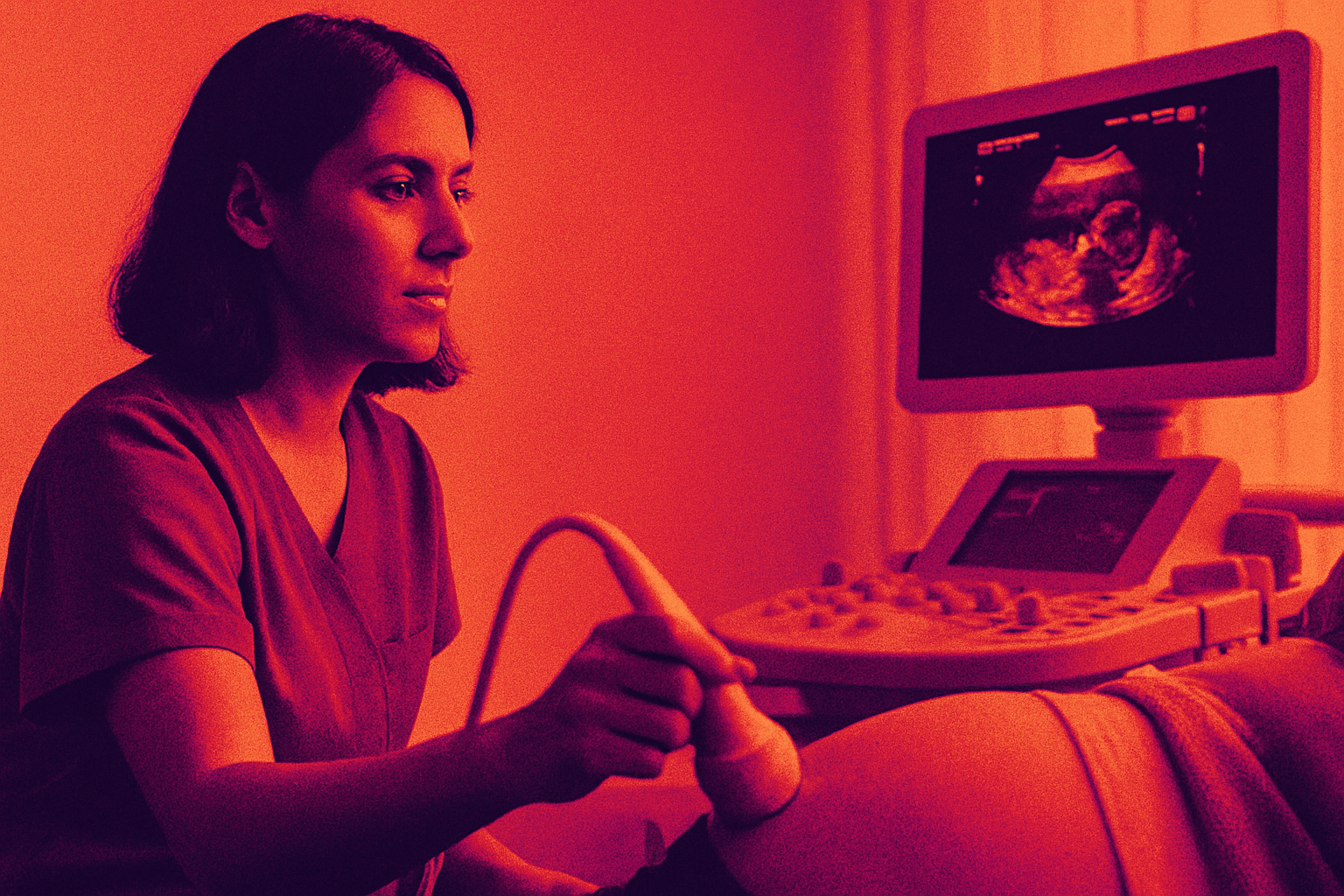
Telehealth Platforms Built Specifically for Women

Per Wheel's 2024 Virtual Care Horizons report, 73 percent of virtual care users identified as female. CDC data from 2021 showed 42 percent of adult women reporting at least one telemedicine visit in the prior year, against 31.7 percent of men. That gap has not closed. Women are the foundation of telehealth, rather than a secondary demographic grafted onto a system designed for someone else.
Part of that skew comes down to caregiving load, which sounds like sociology until you look at the actual logistics. Women account for up to 80 percent of health-related decisions in U.S. households, including decisions for children and aging parents. A platform that eliminates 90 minutes of transit time is not a convenience for someone managing care across three generations; it is the difference between an appointment happening and not happening. The utilization gap reflects that reality more than it reflects any particular enthusiasm for technology.
Employers caught up, belatedly. By 2024, 75 percent of companies reported prioritizing women's health benefits as a talent retention strategy. That institutional demand is what allows a specialty platform to go deep clinically and still reach the scale needed to survive. Without it, niche platforms stay niche.
What Actually Distinguishes a Women-Specific Platform from a General One
Not pink branding. A homepage featuring someone doing yoga on a beach is equally irrelevant. The difference is clinical architecture built from different assumptions about who the patient is and what she is actually dealing with.
General virtual care tends to reproduce the structural failures of general in-person care: brief appointments, generalist providers, conditions treated in isolation. On a women-specific platform, the foundation is different. Clinicians hold credentials or specialized training in PCOS, perimenopause, endometriosis, reproductive endocrinology. They are not generalists who schedule a referral while the patient waits three months. Intake forms, follow-up protocols, and treatment pathways are built around how these conditions actually present.
Where general platforms fall apart most visibly is in care coordination. Pairing medical providers with dietitians, behavioral health practitioners, or health coaches within a single platform removes the friction that causes patients to vanish between referrals. Ask a patient to locate her own therapist, explain her full hormonal history from scratch, and personally ensure that therapist communicates with her prescriber, and a significant percentage simply won't complete the chain. The reason is not lack of motivation. The day is too short and the administrative burden is too high.
There is also a temporal dimension that most general platforms simply are not designed for. A woman's clinical needs shift materially across fertility, pregnancy, postpartum, perimenopause, and menopause. Platforms built around a single episode are useful for that episode. The ones that retain patients over a decade are built for the full arc, because the alternative is watching your users age out of your product.
Insurance architecture matters here more than most platforms advertise upfront. Some operate in-network with major insurers; others run direct-to-consumer or exclusively through employer benefits. That coverage model determines who can realistically access the platform at the actual moment of booking, not in theory.
Platforms Built Around Fertility, Pregnancy, and the Transition into Menopause
Maven Clinic covers the broadest lifecycle span in this category: fertility, pregnancy, parenting, pediatrics, mental health, and menopause, with access to providers across more than 30 specialties. As of January 2025, Maven serves 28 million people globally through employer and health plan partnerships, including coverage for Amazon's 1.5 million global employees. It functions as much as a benefits infrastructure product as a patient-facing service, which is its structural advantage and also its primary limitation. Women outside employer benefit programs largely cannot reach it.
Maven's menopause offering grew 300 percent year-over-year to 550 employer clients. The explanation is straightforward: the women who came to Maven for pregnancy support in 2018 are approaching perimenopause now. A platform that did not follow them would have lost them. Following the patient through her life is not altruism; it is retention logic with clinical substance behind it.
Kindbody operates on a hybrid model that exists because it has to. The platform runs 27 physical clinics and IVF labs alongside telehealth services, covering fertility assessments, preservation, genetic testing, IVF, and menopause support across more than 100 countries, with total funding reaching $290 million as of early 2025. Egg retrieval and embryo transfer cannot be conducted over a video call. Telehealth handles consultations, monitoring follow-ups, and coordination; the clinics handle the interventional work. That division is not a gap in the model. It is an honest description of what telehealth can and cannot do within reproductive medicine.
Menopause-Specific Platforms and the Clinical Case for Specialization
For a long time, menopause was the most underfunded and clinically neglected corner of femtech. Only 7 percent of femtech startups were focused on it as of a 2024 Healthcare IT Today report. That was not a market inefficiency waiting to be corrected. Rather, it was a reflection of how medicine had historically treated menopause: as a normal transition requiring no particular expertise. That framing is both condescending and clinically wrong.
Midi Health has built a clinical-grade menopause practice. Its providers are trained specifically in menopause management, prescribe both hormone replacement therapy and non-hormonal options, and operate within insurance networks. More than 90 percent of Midi patients report symptom improvement within two months of their first visit, per BCG data from 2025. Those results come from specialized training and appropriate treatment protocols, not from routing patients through generalists who field menopause questions between unrelated appointments.
Elektra Health takes a different orientation, pairing teleconsultation with an education-forward model that treats patient understanding of hormonal physiology as part of the clinical intervention itself. The premise is that a patient who understands what is happening to her body participates in her own care more effectively. There is documented support for that in chronic condition management, and menopause, with its years-long trajectory and wide symptom variation, functions as a chronic condition whether it is labeled as one or not.
BCG estimated in 2025 that the U.S. menopause care market will expand eightfold by 2030, exceeding $40 billion if women with moderate or severe symptoms receive adequate treatment, with telehealth and digital services accounting for more than $7 billion of that. Employer recognition is still catching up; 18 percent of companies plan to offer menopause benefits in 2025, up from 4 percent in 2023. The gap between market size and employer awareness is substantial.
The clinical case for specialization is not complicated. A generalist without menopause-specific training will miss the full range of perimenopause symptom presentations and will lack the protocol-level familiarity to adjust treatment when first-line options fail. A video interface does not fix any of that. Only training does.
Platforms Focused on Hormonal Conditions Like PCOS and Endometriosis
Allara exists because the PCOS care gap was severe enough that a patient decided to build the alternative herself. Founder Rachel Blank launched the platform in 2020 after her own diagnosis, building a coordinated care model that combines endocrinology-focused medical care with registered dietitian support. The logic is clinical: PCOS has metabolic, hormonal, and nutritional dimensions that interact with each other. Treating them in sequence across three separate providers who never communicate is not care; it is a referral chain with no closure. In January 2025, Allara raised $38.5 million in a Series B to expand its virtual platform across the U.S.
The integrated dietitian model reflects how PCOS actually responds to treatment. Many symptoms improve with nutritional and metabolic intervention alongside, or even before, pharmaceutical management. Separating those tracks into different providers in different systems means a meaningful portion of patients never complete both pathways. The barrier is not that the care doesn't exist; navigating fragmented systems is its own full-time job that most people cannot take on.
Endometriosis presents a harder problem. The condition requires imaging and often surgical confirmation, neither of which telehealth can deliver. Platforms addressing endometriosis are honest about this; their clinical scope centers on symptom management, pain treatment coordination, and navigating the referral pathway to specialist care. The real value is in compressing diagnostic delay from years to months by getting patients into the right pipeline faster. That constraint is not a platform limitation. It is an accurate description of how the condition works.
Sexual and Reproductive Health Platforms, Including Post-Dobbs Abortion Access
Wisp was founded in 2018 around a specific premise: fast, discreet online access to prescription care for sexual and reproductive health. About 10 percent of its patient base lives in what the platform identifies as reproductive healthcare deserts, where free medication delivery is a clinical necessity. Without it, access does not exist at all.
In 2024, Wisp expanded into weight management, adding GLP-1 medications specifically for women with PCOS and perimenopausal women experiencing metabolic changes. Both populations are frequently excluded from mainstream weight loss programs designed without hormonal context. The expansion followed clinical logic rather than market opportunism: the underlying patient needs were already there, already connected to the conditions Wisp was managing.
The post-Dobbs landscape has reshaped reproductive telehealth in ways that are still being fully mapped. By the end of 2024, one in four abortions in the U.S. was provided via telehealth, per KFF data updated in 2025. The #WeCount study estimated roughly 300,000 telehealth abortions by 2025, with shield-state providers serving nearly 15,000 women per month in states with bans or restrictions, a 62 percent increase from June 2024. As of July 2025, eight states have enacted shield laws explicitly protecting telehealth providers regardless of where the patient is located. The legal infrastructure is being constructed around the clinical service as it operates.
Research has confirmed that medication abortion provided via telehealth carries adverse event rates below 1 percent, comparable to in-person provision. The clinical profile is not the barrier. Geography, law, and distribution are.
Platforms running medically accurate advertising that references female anatomy are routinely rejected by ad platforms. Equivalent men's health advertising faces no such obstacle. That asymmetry determines which women can find these services, particularly those in restrictive states who most need alternative channels. It is a documented operational constraint with direct patient consequences, and it is rarely discussed honestly in coverage of the category.
Mental Health and the Case for Integrating It Within Women's Health Platforms
Hormonal conditions do not stop at the body. PCOS, perimenopause, postpartum, and endometriosis each carry documented associations with anxiety, depression, and mood dysregulation. Treating the physical and psychological dimensions in separate systems, with no communication between providers, misses the causal relationship between them.
Maven included mental health as a core specialty from its original maternity-focused design, not as a later add-on. That choice reflected a clinical understanding of the terrain: pregnancy and postpartum are among the highest-risk periods for mood disorders, and a platform that handled the physical side while routing mental health elsewhere was not actually delivering integrated care.
A patient who must locate a separate therapist, establish a new clinical relationship, and re-explain her full hormonal history from scratch is statistically less likely to complete that step than one whose care team already includes a behavioral health provider with full context. Structuring mental health into the platform is a mechanism for ensuring clinical follow-through actually happens, not a premium feature.
The coordination argument goes beyond access. When a medication, whether hormonal contraception, HRT, or a PCOS treatment protocol, is affecting a patient's mood, the prescribing clinician and the behavioral health provider need to communicate. On platforms that keep those roles within the same care team, that communication is routine. On platforms that do not, it becomes the patient's responsibility to manage between two providers who have never spoken, which is an unreasonable burden to place on someone already managing a chronic condition.
General mental health apps are not designed for this. They address psychological symptoms in abstraction from the hormonal context generating them. For women whose anxiety or depression is downstream of endocrine disruption or hormonal transition, treating the symptom without the context is incomplete care.
How the Funding Surge Is Shaping Which Platforms Get Built and Which Gaps Remain
2024 was the most active year on record for femtech funding: $753 million deployed across the category. Two deals, Flo Health's $200 million round and Maven's $125 million Series F, together represented 43 percent of that total. That concentration reflects where investor conviction sits. Capital is backing scaling operations and consolidating the category, not distributing exploratory funding across early experiments. The bet is on infrastructure.
Average deal sizes have grown substantially since 2020, from $5 million to $10.7 million in 2025. The question driving investment has shifted from whether women-focused health platforms can attract patients to whether they can build the provider networks, clinical infrastructure, and insurance integrations required to operate sustainably at scale. That is a harder and more expensive problem than patient acquisition, which explains why capital is flowing toward platforms that have already partially solved it rather than toward new entrants.
AI-powered diagnostics emerged as a distinct breakout category in 2025, with capital moving into breast cancer screening tools, STI diagnostics, and menstrual biosensing. These investments represent a shift in ambition, from patient-facing wellness interfaces toward clinical-grade tooling embedded in actual diagnostic workflows. Whether the clinical evidence keeps pace with the investment enthusiasm remains to be seen.
The concentration of capital in reproductive health and menopause leaves other areas chronically underdeveloped. Chronic pelvic pain, autoimmune conditions that disproportionately affect women, and postpartum physical recovery have received comparatively little telehealth investment. The gaps correlate with conditions that are expensive to build sustained care pathways around and difficult to treat episodically, which makes them unattractive to investors optimizing for clean unit economics. The funding goes where the model works, not necessarily where the need is greatest.
Funding also does not equal access, and the category has a real equity problem that gets buried in the growth narrative. The largest platforms are employer-benefit products, accessible primarily to women with full-time employment at companies with progressive benefits programs. Uninsured women, gig workers, and women in states with restrictive healthcare environments are underserved precisely because the category's growth has been concentrated in a delivery channel they cannot reach.
What to Look for When Choosing a Women's Telehealth Platform
Start with clinical specificity, and be honest about whether a platform actually covers your condition or is merely adjacent to it. A menopause-specialist platform is not the right tool for managing PCOS. A fertility-focused platform is not designed for someone navigating perimenopause. The more precisely the platform's clinical focus aligns with your actual diagnosis, the more its workflows, provider training, and treatment protocols will be calibrated to your situation rather than adapted from something close enough.
Look past the general license. Board certification in reproductive endocrinology, membership in The Menopause Society, or documented specialty training in a relevant condition are more meaningful signals than an OB-GYN credential and a friendly website. Ask directly what specialized training the platform's providers hold for your specific diagnosis. A vague answer is itself informative.
Understand the care model before you book anything. Episodic platforms handle one-off prescription requests; ongoing care models include a dedicated care team, regular follow-ups, and coordination across specialties. Chronic conditions, including PCOS, perimenopause, and endometriosis, require the latter. A platform optimized for one-time prescriptions will not serve a condition that evolves over years, and this distinction is rarely advertised clearly because episodic platforms know it is a liability.
Confirm insurance coverage before the first visit. The cost difference between an in-network platform and a direct-pay model is significant enough to determine whether the platform is realistic for you at all. Some platforms are only accessible through employer benefit programs, which is not a small caveat buried in the fine print.
If your condition has a documented hormonal-mood connection, and many do, assess whether behavioral health is integrated within the platform or simply referred out. A platform that routes you to an external therapist with no communication pathway back to your prescriber has a structural gap worth knowing about before you're in the middle of treatment.
Geography matters more than most platforms acknowledge upfront. For services involving medication delivery, including contraception, HRT, and medication abortion, verify that the platform operates in your state and ships to your location. For conditions that will eventually require procedural care, a platform maintaining partnerships with physical clinic networks offers a more complete continuum than one that is purely virtual. At some point the clinical needs become tangible, and a platform that cannot follow you to that point is only useful up until it isn't.