Endometriosis Research Gaps and Diagnostic Delays
Patients wait nearly a decade for endometriosis diagnosis due to missing diagnostic tools.
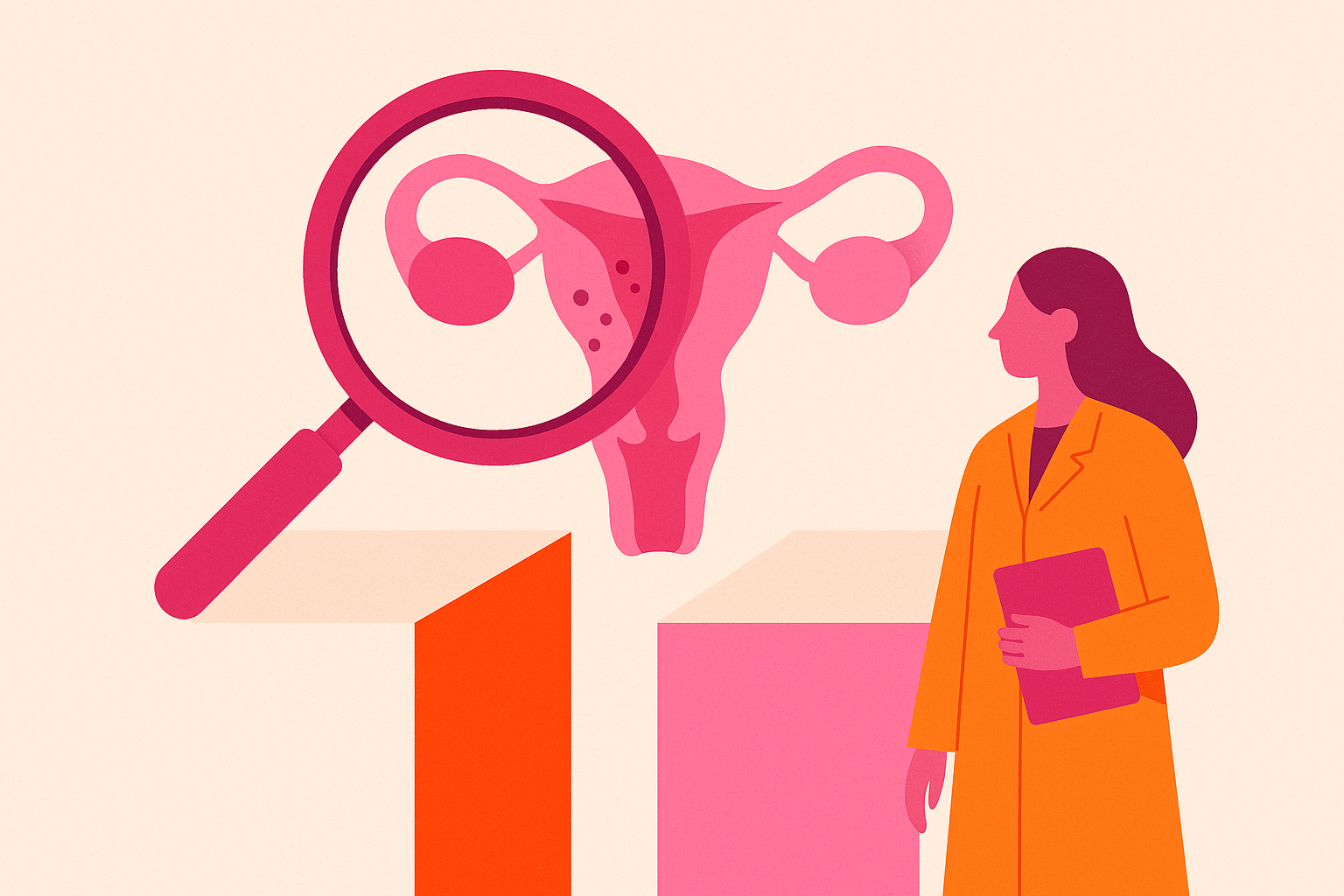
Endometriosis is a disease where tissue similar to the uterine lining grows outside the uterus, and it causes chronic pelvic pain, painful sex, painful urination, and fertility problems. It affects roughly 6.5 million people in the United States and over 190 million worldwide, a population that includes cisgender women, transgender men, and non-binary people. Global data tracked by the Global Burden of Disease project shows prevalent cases among women of childbearing age climbed from 19.08 million in 1990 to 21.05 million in 2021, about a 10% rise, with disability-adjusted life years rising from 1.759 million to 1.939 million over the same stretch. The average patient misses 19 workdays a year because of it, and despite affecting roughly 1 in 10 women, nobody has fully nailed down what causes it. That last part is the thread running through everything below.
What a decade-long wait for a diagnosis actually looks like
Sit with this number for a second: 6.8 years, the average diagnostic delay pulled from a systematic review of studies across multiple countries, though the range runs from 1.5 years in some places to 11.4 in others. A gap that wide reflects systemic factors layered on top of biological ones. A 2020 UK All-Party Parliamentary Group report put the average closer to 7.5 years from symptom onset, and newer estimates push it toward 10. Somewhere in that stretch, the average patient sees six different providers before anyone says the word "endometriosis" out loud, which is more doctors than most people see for a broken bone, a root canal, and a bad case of the flu combined.
Age matters more than you'd expect. Epic Research pulled patient records in 2024 and found diagnosis rates were highest among women 35 to 49, at 85.4 per 10,000, and lowest among those 15 to 24, at 18.6 per 10,000. Teenagers get endometriosis too, plenty of them, but the years when symptoms typically start are the exact years adolescents get waved off. Over half of patients diagnosed in 2024, 55.9% of them, had documented abdominal or pelvic pain in the two years before diagnosis. That pain was written down and sat in the chart, and nobody chased it.
Some of this comes down to how loosely we use the word "pain." It has to cover everything from a mild cramp to symptoms bad enough to keep someone home from work nineteen days a year, and when severe menstrual suffering gets filed under normal (which it still does, culturally, more than anyone wants to admit), both patient and doctor lose the urgency to dig further. There's movement, at least, since from 2017 to 2024, the rate of endometriosis diagnoses per 10,000 patients rose 32%, from 24.9 to 32.8. Awareness is climbing, but the delay is still measured in years, not months.
Why the delay is not just a clinician awareness problem
The easy answer is to blame doctors who don't know the symptoms, but the 2025 BJOG systematic review found both patients and physicians contribute to delay, with the longer delays tending to start on the physician side, and not because any individual doctor slept through the relevant lecture in medical school.
Consider the diagnostic gold standard for a moment. Surgical laparoscopy is still the only definitive way to confirm endometriosis, which means confirming a diagnosis means putting a patient under anesthesia and going in with a camera. No clinician does that on a hunch, and honestly, they shouldn't. That single fact creates a bottleneck no awareness campaign can talk its way around. Train every general practitioner in the country to spot the symptom pattern perfectly, and you still hit the same wall: there is no faster way to confirm the disease exists.
Layer a second problem on top: nobody has mapped where in the healthcare system these delays actually pile up. Is it primary care sitting on referrals for months? Backed-up specialist queues? The tracking systems that would answer that question were never built, so the delay stays a black box even to the people trying to shrink it. Then there's a detail from the research that's hard to shake: a male partner's presence in the exam room can shift how seriously a patient's pain gets taken, changing referral decisions in ways that have nothing to do with the symptoms on the table. That's a system quietly grading the same pain report differently depending on who's sitting in the chair next to the patient.
Put it together and you get a patient whose pain is real, documented, and obvious in hindsight, who still waits years, because no faster, non-invasive pathway exists. Missing infrastructure carries real weight here alongside any gaps in awareness. Which raises a harder question: do some patients wait even longer than others? The answer isn't encouraging.
How race compounds an already long delay
A 2019 BJOG meta-analysis found Black women were nearly 50% less likely to be diagnosed with endometriosis than White women, an odds ratio of 0.49. Asian women, at the other end, were over 60% more likely, an odds ratio of 1.63. The disease is the same, and the average delay statistics match the section above, yet the odds of ever getting a diagnosis at all differ wildly.
The wait itself stretches further, too. Where the overall average sits at 7 to 10 years, the evidence shows delays stretching considerably longer for some racial and ethnic groups. A 2024 New Zealand survey found diagnostic delays averaging 11.6 years for Māori women and 12.4 years for Pasifika women, against 8.6 years overall in that same sample. Gaps like that don't close on their own; something specific holds them open, and the research keeps pointing at a stubborn clinical myth that Black women carry a higher pain threshold, or that their reported pain signals infection rather than organic disease. That belief has zero biological grounding, and the research literature ties it directly to documented bias sitting inside referral decisions.
The gap doesn't stop at diagnosis either. A 2025 study of Medicaid claims covering 16,372 endometriosis patients (23.3% Black, 66.0% White) looked across 28 drug classes and found 17 of them prescribed significantly less often to Black patients after diagnosis. Research has also shown higher rates of perioperative complications and higher mortality among Black women with endometriosis, meaning the harm compounds well past the moment someone finally gets a name for what's wrong. Structured efforts aimed squarely at this gap remain rare, and the few that exist are a good step, though decades late.
The absence of a non-invasive diagnostic test
Back to the laparoscopy problem, because it's worth sitting with a little longer. Without a non-invasive alternative, confirming endometriosis means surgery, and clinicians are, reasonably, reluctant to send someone under the knife on a hunch. So instead, patients rack up symptoms and appointments one at a time until the case for surgery finally becomes undeniable. That slow accumulation is where the years actually go.
Researchers are chasing alternatives. Multiple non-invasive diagnostic approaches are under active investigation, and none have yet hit the sensitivity and specificity needed for a clinic to actually order them. That says something about how hard the underlying biology is to pin down, and it loops straight into the funding problem covered further down: without sustained investment, a promising candidate test doesn't make the leap from a university lab to something your OB-GYN can request on a Tuesday.
Here's a number that shows how much slips through the cracks without a faster test: up to 30 to 50% of women experiencing infertility have undiagnosed endometriosis. Many of them only get identified when infertility forces a workup, meaning the disease was there the whole time, quietly, until a second condition dragged it into the light. A validated non-invasive test could shave years off individual delays and shift diagnosis to a different point in the pathway entirely, reaching a teenager in a pediatrician's office or a patient in primary care in a way surgery simply can't. The Feinstein Institutes' ROSE study, advancing a novel diagnostic approach, is one live example of research pointed in that direction. It's worth watching, though not yet ready to promise anyone a faster answer, just closer than it was five years ago.
What the funding numbers reveal about research priorities
In fiscal year 2024, the NIH put $28 million toward endometriosis research. That's about 0.067% of the NIH's total budget, or roughly $4.30 per affected person per year. On its own that number is just a number, but next to its neighbor, it starts to say something.
Endometriosis affects roughly 1 in 10 women. Prostate cancer affects roughly 1 in 8 men, a comparable share of the population by the numbers. The NIH allocated roughly $311 million to prostate cancer research in 2024, more than 11 times the endometriosis figure. Nobody's arguing prostate cancer research is overfunded here; the point is what a gap that size says about which diseases get treated as urgent and which get treated as background noise. Endometriosis research remains a rounding error inside the broader grant pool when measured against the scale of its burden. And endometriosis isn't even competing against everything else for attention; it's competing within the narrow slice of research funding that goes to gynecological health at all, a category that also has to stretch to cover PCOS, menopause, menstrual disorders, pregnancy complications, and postpartum depression.
There is real movement, and it deserves to be said plainly instead of buried under the bad news. NIH funding has grown substantially to reach today's $28 million. Congressional attention to endometriosis has grown, and dedicated research infrastructure has begun to take shape. These are real gains, all three, though narrow ones; the distance between funding and disease burden is still wide enough to explain why basic questions about mechanism remain unanswered this deep into modern medicine.
The economic cost of not solving this sooner
Here's where the abstraction turns into a dollar figure. The annual economic burden of endometriosis is substantial across high-income countries, combining direct healthcare spending with lost productivity. The per-patient costs are substantial, sitting in a range researchers compare to other serious chronic diseases that receive far more attention and funding — conditions everyone takes seriously without a second thought. Both are diseases everyone takes seriously without a second thought, right next to a disease that takes seven years just to get named.
The productivity piece deserves its own beat, because delay doesn't just push treatment costs down the road; it stretches out how long a working life stays disrupted. Endometriosis is tied to more sick leave, more work impairment, and more presenteeism (showing up while still struggling through it), both before and after diagnosis, which means the lost-productivity clock starts ticking long before anyone hands the patient an answer. Researchers and health economists have noted that closing women's health disparities broadly carries enormous economic potential, with endometriosis among the conditions most clearly driving that gap.
Something almost funny sits underneath all of it, in a dark way. The disease costs health systems far more in delayed, complicated care than early intervention would cost upfront. Early intervention needs diagnostic tools and research funding that current investment hasn't supported, so the expensive path stays the one getting funded, by default, one missed diagnosis at a time.
Where the research gaps actually sit and what closing them requires
There are roughly four gaps, and they feed each other. Mechanistic: the biological origins of endometriosis are still poorly understood, which limits both prevention and any real shot at targeted treatment. Diagnostic: no validated non-invasive test exists, which keeps laparoscopy as the unavoidable bottleneck for confirming what a patient already suspects in her own body. Equity: documented racial and ethnic disparities in diagnosis and treatment sit right there in the published literature but aren't built systematically into research design or clinical guidelines. Funding: investment is out of proportion to disease burden at every stage, from basic science through clinical tool development.
None of these sit apart from each other. Underfunding slows mechanistic research; without a clear mechanism, biomarker work has no real target; without a biomarker, the diagnostic bottleneck holds; the bottleneck sustains the delay; the delay prolongs the exact economic and human cost that should, in a saner world, justify the funding increase nobody's approved yet. Closing it means pushing on more than one point in that circle at the same time, not picking the easiest one and hoping it drags the rest along.
What would actually move the needle? NIH appropriations at a scale that matches the disease's real reach, research designs that build in diverse patient populations from day one instead of bolting them on later, real money behind non-invasive diagnostics treated like a priority instead of a nice-to-have, and tracking systems built to show exactly where in the care pathway a given patient's delay is piling up. Setting research priorities from lived experience instead of inherited assumption is one working model advocates and researchers have pointed to as essential for closing these gaps.
The diagnostic delay is the part you can put a number on. What sits underneath it runs deeper, and for decades now, patients have been asked to be patient while the research enterprise still hasn't built the tools that would let them stop waiting.