Sex Differences in Cardiovascular Disease Research
Women's heart attacks kill twice as fast, yet research still treats them as the exception.
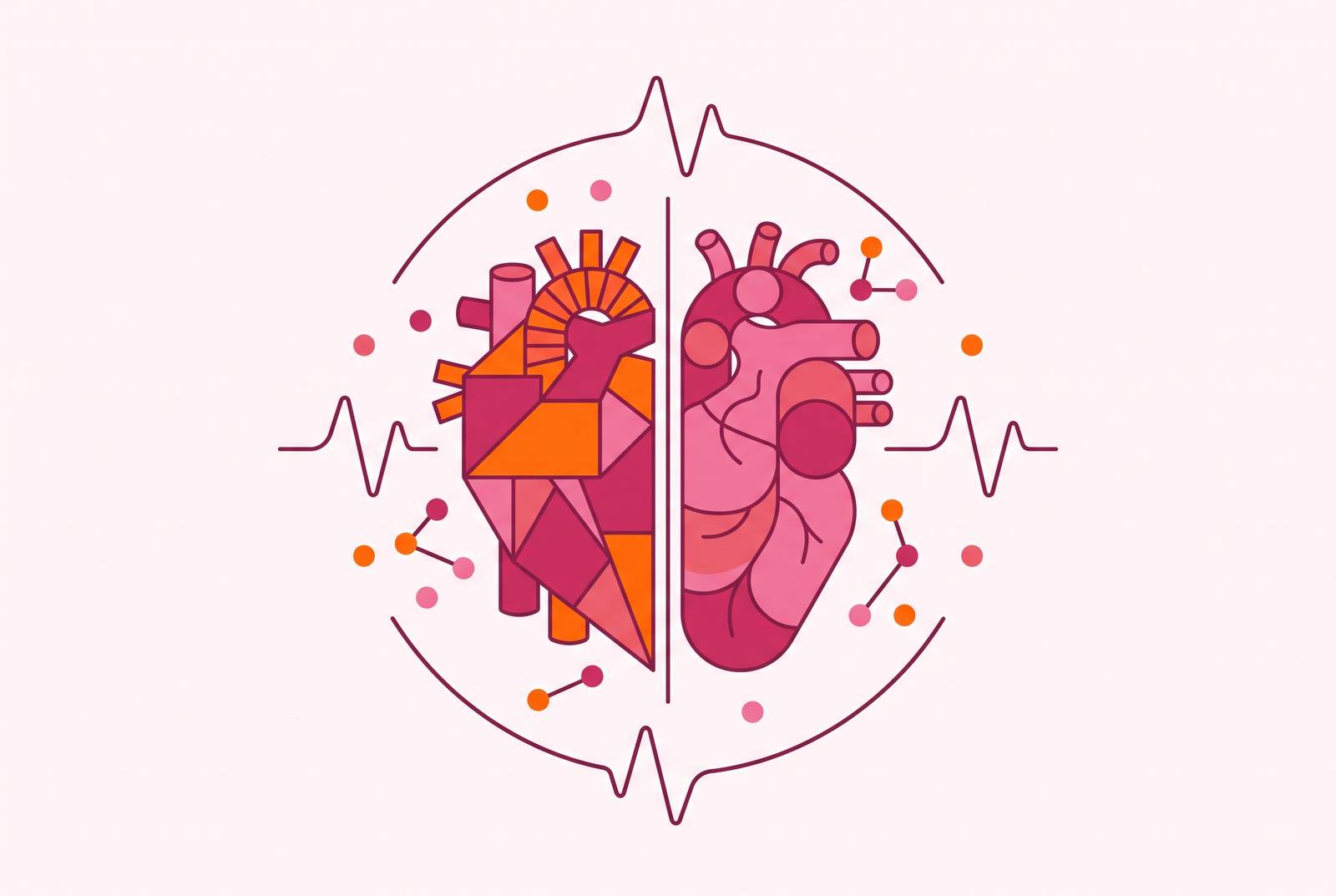
Cardiovascular disease shows up later in women than in men, but once it arrives, it kills faster and more often. That single fact explains most of what follows: the missed diagnoses, the undertreatment, the trials that still don't enroll enough women to answer basic questions about the disease that kills more of them than anything else does. Roughly one in five U.S. deaths traces back to cardiovascular disease, and the sex gap in how it gets studied, diagnosed, and treated is a structural feature the field built in from the start and still talks about like a rounding error.
How cardiovascular disease arrives later in women but kills them faster
Women tend to develop cardiovascular disease seven to ten years later than men, on average. That gap sounds like a reprieve, but once the disease shows up in a woman, it moves faster and hits harder than it does in a man of the same age carrying the same diagnosis.
A study tracking 87,812 acute coronary syndrome patients, over a third of them women, found the mortality risk after STEMI, the most severe kind of heart attack where a coronary artery is fully blocked, ran 1.65 times higher for women than men. Within 30 days, 11.8% of women died against 4.6% of men, roughly double, in the same disease, treated in the same hospitals. Sit with that number longer than any other figure in this piece.
Money narrows the gap but doesn't close it, and that gap-that-won't-close is itself a clue. A multinational registry spanning 22,087 heart attack patients across 12 countries found women's 30-day STEMI mortality in middle-income countries ran 12.4% against 5.8% for men; in high-income countries the gap shrank to 6.8% versus 5.1%. Better hospitals and faster ambulances both help, but the difference held up even after revascularization, meaning women who got the identical stent or bypass still died at higher rates than men who got the same procedure from the same team. The old explanation, that women just show up sicker or later, doesn't survive contact with that detail. Something else is driving this, and cardiology hasn't fully named it yet.
Younger women aren't exempt either. Heart disease mortality among women under 55 has been climbing, which cuts against the old assumption that cardiovascular risk is strictly a post-menopause problem. The disease waits longer to show up, then spends the rest of the visit making up for lost time.
What women's symptoms actually look like and why clinicians miss them
Ask someone to picture a heart attack and they'll describe a man clutching his chest, sweating, grimacing. That image comes from research populations that were overwhelmingly male; it's a product of who got studied, not a neutral biological default. Women more often show up with fatigue, nausea, jaw pain, or back pain, and both patients and doctors tend to file those under something else entirely: bad sleep, stress, a pulled muscle, the flu.
That mismatch produces delay on both ends. Women generally wait longer than men to seek treatment once symptoms start, a behavioral lag stacked on top of an already faster-moving disease process. Once they reach a hospital, women are less likely than men with comparable indicators to get admitted to a cardiac care unit or ICU, and that triage call carries real weight: women sent to general medical wards instead of a CCU or ICU were 89% more likely to die than male patients who got the higher level of monitoring. One sorting decision, made in the first hour, does that much damage.
Calling this presentation "atypical" gives away which sex the baseline was built around, since for women this pattern is the norm rather than the exception. The delay largely comes from clinicians pattern-matching against training data that skewed male from the start, and patient behavior alone doesn't account for the causality, worth saying plainly instead of hedging around it.
Disease entities that predominantly affect women and are routinely missed by standard diagnostic workups
Coronary angiography looks for blockages: focal, visible narrowings in the artery wall. It's an excellent tool for that one job and a poor one for almost anything else, and several conditions that disproportionately affect women don't produce blockages at all.
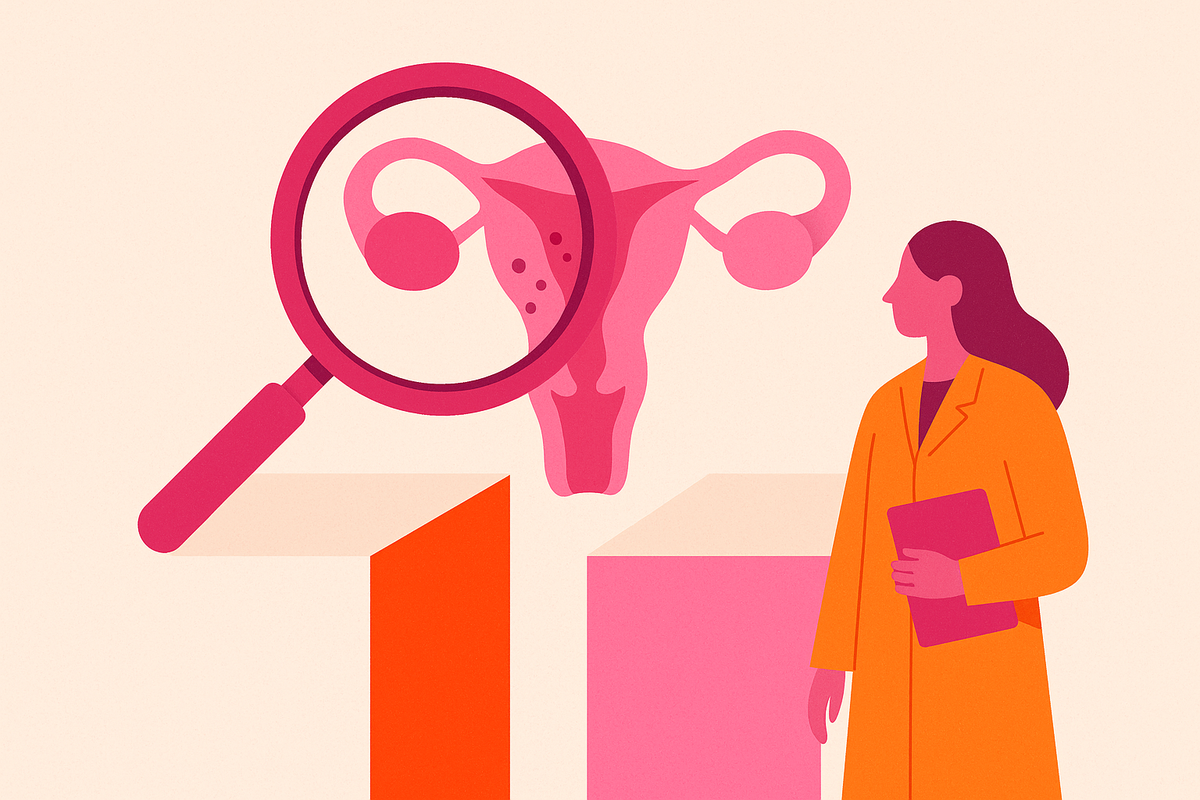
INOCA and MINOCA, ischemia and myocardial infarction with no obstructive coronary artery disease, describe exactly what the names say: tissue damage or oxygen deprivation happening through mechanisms an angiogram was never built to catch. Spontaneous coronary artery dissection, where the artery wall tears instead of clogs, disproportionately strikes younger women and gets missed or misread on standard imaging more often than it should. Takotsubo syndrome, sometimes called stress cardiomyopathy, mostly hits postmenopausal women after acute emotional or physical stress: the heart temporarily balloons out of shape and mimics a heart attack on every measure except the one that would explain it. Heart failure with preserved ejection fraction, HFpEF, counts women as the majority of its patients, yet the diagnostic criteria were built around the reduced-ejection-fraction phenotype, which skews male.
Underneath all of this sits microvascular dysfunction: a diffuse problem spread across tiny vessels rather than parked at one blockable spot, and women show higher susceptibility to it than men do. An angiogram is built to find a single narrow point, and it struggles to see something spread out like fog across the whole system, which is the actual reason so many women get told their arteries look fine while their chest still hurts.
A "normal" angiogram in a woman with chest pain, fatigue, and shortness of breath may simply mean the test wasn't built to find what she has. These conditions account for a real share of cardiac events in women, and fixing the miss involves using functional imaging and intracoronary physiology assessment, tools that measure how blood actually moves instead of just where it's stuck, on the patients who need them.
The risk factors that hit women harder, including the ones standard calculators ignore
Hypertension, diabetes, high cholesterol, smoking: the usual suspects, except they're not equally usual, since each one confers disproportionately higher cardiovascular risk in women than in men carrying the same condition. Smoking is the cleanest example: a meta-analysis found a 25% higher relative risk of major cardiovascular events in women compared to men with equivalent tobacco exposure. Same cigarette count, worse outcome, and that alone should end any argument that risk factors work the same way in both sexes.
Race complicates the picture further. Among U.S. women, Black women carry the highest rate of high blood pressure at 58.4%, while Hispanic women sit at the low end at 35.3%. Sex and race interact here; neither one alone tells the full story.
Here's the finding actually worth sitting with, though: taken together, the traditional risk factors explain a smaller share of total cardiovascular risk in women than they do in men. Factors the standard models don't capture at all appear to be driving outcomes instead, and the AHA and ACC have started naming some of it formally, in the 2018 cholesterol guideline and the 2019 primary prevention guideline, as female-specific risk enhancers: hypertensive disorders of pregnancy like preeclampsia, gestational diabetes, preterm delivery, polycystic ovary syndrome, early menopause, and never having breastfed.
All six of those already sit in a woman's medical chart. Pregnancy complications get recorded, and menopause timing gets recorded, but what doesn't reliably happen is anyone pulling those records into a cardiovascular risk conversation twenty years later. The data exist; the connection mostly doesn't get made, and this is arguably the cheapest fix on this entire list, because nobody has to discover anything new, someone just has to look at the chart that's already open.
Coronary artery calcium scoring belongs on the same list of tools that undercount female risk: the same CAC score predicts higher mortality and ASCVD risk in women than in men, which means the standard thresholds, built around male outcomes, systematically undersell what that score means for a woman. LDL cholesterol tells a related story. Premenopausal women typically run lower LDL-C than age-matched men, then see a sharp rise once menopause starts, a transition window that mostly goes unmonitored in routine care. Chronic stress, depression, and hard social conditions also carry outsized cardiovascular weight in women, though the exact mechanisms haven't been fully mapped yet.
What estrogen does and does not protect against, and why menopause changes the equation
Premenopausal women have a lower rate of hypertension and cardiovascular events than age-matched men, and that gap narrows sharply once menopause hits. Estrogen is a real part of the explanation. 17-beta-estradiol works through nuclear estrogen receptors, ERα and ERβ, plus a separate G protein-coupled estrogen receptor, GPER, running genomic and non-genomic pathways side by side. In blood vessels it contributes to vascular protection through several overlapping pathways. Take that away at menopause and atherosclerotic risk speeds up.
So why not just replace the estrogen? A tidy hormone-deficiency story stops being tidy here, and the mess matters clinically, not just academically. Early trials of oral menopausal hormone therapy, using conjugated equine estrogen combined with medroxyprogesterone acetate, showed increased risk of coronary heart disease and stroke in older postmenopausal women. That result spooked a generation of prescribers, reasonably, given what the data seemed to show at the time. Contemporary formulations, low-dose transdermal estrogen paired with micronized progesterone, carry a meaningfully lower cardiovascular risk profile than those earlier trials suggested, and treating the two eras of evidence as interchangeable obscures a meaningful difference in risk profile.
The thing connecting these two seemingly contradictory results is the question of timing: evidence suggests estrogen therapy's benefits depend heavily on when it is initiated relative to menopause. Start early and the vascular tissue is still responsive, but start late, and the tissue has often already reshaped how it responds to hormone signaling in the first place. Timing, more than the hormone itself, helps explain why older-cohort trials found harm while younger-initiation data tells a different story.
One more wrinkle worth naming: estrogen leaves part of the picture unexplained, inconvenient as that is for anyone hoping for one clean mechanism to blame. The honest clinical answer runs toward individualized, timing-aware, formulation-specific conversations between doctor and patient, an approach that's less satisfying to write about but more accurate to practice.
How treatment protocols built on male data leave women undertreated
Even when women show up with the same clinical indicators as men, they're less likely to get diagnostic imaging, less likely to get percutaneous coronary intervention, and less likely to start statin therapy. That pattern holds across multiple decision points in care, not one isolated gap. Aspirin is where it's easiest to see, because the story splits cleanly depending on which trial gets cited, and it's worth walking through slowly.
The Physicians' Health Study tracked over 20,000 male physicians and found low-dose aspirin cut myocardial infarction risk. That result got applied broadly and immediately, to women included, despite zero women in the trial. The Women's Health Study arrived in 2005 with 39,000 female participants and found low-dose aspirin lowered stroke risk in women but showed no overall effect on their MI risk. In the years between, MI-prevention guidance built entirely on the all-male trial got handed to female patients anyway: evidence from one sex, applied wholesale to the other, before the Women's Health Study arrived to check.
Anticoagulants carry their own asymmetry: bleeding risk runs higher in women, and sex-specific dosing or monitoring protocols still haven't become standard practice across most health systems. In STEMI treatment specifically, women show higher rates of bleeding complications alongside higher 30-day mortality, which suggests the reperfusion protocol itself needs a sex-aware rework, beyond better execution of the version already in use.
Cardiac rehab, the structured exercise and education program prescribed after a cardiac event, sees markedly lower participation among women. Referral bias plays a role, as does scheduling built around a patient without caregiving duties, and program content designed around a male patient's recovery experience. That gap compounds everything that came before it: atypical presentation leads to delayed or wrong diagnosis, which leads to bad triage, which feeds a treatment protocol calibrated on male trial data, which produces worse outcomes. Each step amplifies the one before it, until the original mismatch, a diagnostic model built from mostly male research subjects, turns into something far bigger than where it started.
Why women make up only about 38–41% of cardiovascular trial participants even though CVD is their leading killer
Cardiovascular disease is the leading cause of death for women, yet women make up somewhere between 38% and 41% of participants in the trials meant to study it. That gap sits underneath most of what's described above; it functions as much as mechanism as symptom.
A systematic review covering 1,079 cardiovascular trials registered between 2017 and 2023 found that of 1,396,104 total participants, only 571,641, or 41%, were women. The shortfall didn't spread evenly, concentrating hardest in arrhythmia, coronary heart disease, acute coronary syndrome, and heart failure trials, which happen to be exactly the categories where the female mortality gap runs largest. Drug approvals show the same pattern: across trials supporting 36 cardiovascular drug approvals, only 34% of the 224,417 participants were women.
The NIH mandated inclusion of women in federally funded research back in 1993. Three decades later, those enrollment numbers are what that mandate produced, which says something uncomfortable about how slowly a policy on paper moves through the actual machinery of trial design.
The downstream effects run well past drug labels. Risk models trained on male-skewed populations misestimate risk for women almost by construction. Dosing guidance built without enough female participants to detect sex differences in absorption and clearance leaves that variable essentially unmeasured. Guideline recommendations get issued without the statistical power to detect a sex-differential effect even where one exists, which means the guidelines are, in effect, untested on half the population they claim to cover.
Here's the loop worth naming directly: male-skewed evidence produces clinical tools calibrated to male physiology, those tools produce worse outcomes in women, and those worse outcomes get chalked up to female biology being harder to treat rather than to the tools being built on incomplete evidence in the first place. That explanation survives mostly because "women are just biologically more complicated" sounds plausible enough that nobody has to go back and check whether the tool was ever the real problem.
What closing the gap requires: sex-disaggregated data, updated risk models, and purpose-built clinical pathways
Closing this gap doesn't require reinventing cardiology. It requires enrollment numbers to actually turn into published, sex-specific results, and it requires dedicated trials for conditions like INOCA, MINOCA, SCAD, and HFpEF, where evidence built mostly on men simply doesn't transfer. Mechanistic research needs to treat sex chromosome biology and reproductive history as variables worth measuring, not noise to control away.
On the clinical side, part of the fix is already sitting in paperwork that exists: pregnancy complications, PCOS, early menopause. These sit in patient charts right now and just need to enter the risk conversation they already qualify for. That's the cheapest, fastest fix in this entire piece, and it costs nothing new to build. Coronary artery calcium thresholds need recalibrating to reflect what a given score actually predicts in women, not what it predicted in the male cohorts the thresholds came from. Functional imaging and microvascular assessment need wider use for women whose angiograms come back clean despite symptoms that haven't gone anywhere.
Treatment protocols need sex-aware dosing and bleeding-risk guidance for anticoagulants, cardiac rehab redesigned around flexible scheduling and content that reflects women's recovery instead of assuming it mirrors men's, and clinician training that teaches atypical presentation as the actual female norm, not a strange exception to memorize for boards and then forget. Most of what's missing here isn't new science; it's the will to treat information that already exists as information worth using.