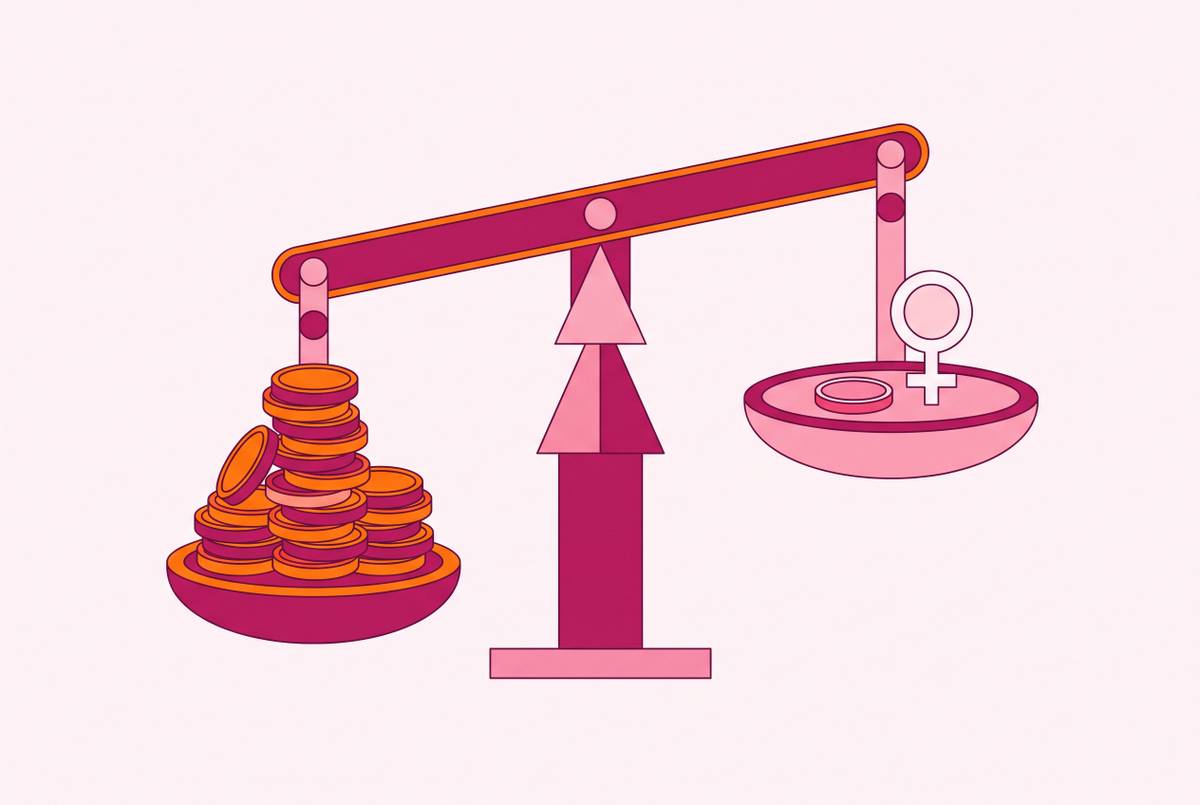
Regulatory Barriers Specific to Women's Health Devices
Decades of excluding women from trials left femtech regulators with inadequate evidence.
The FemTech market is projected to exceed $50 billion, growing at a double-digit rate. This mismatch matters most: expansion keeps outrunning available evidence, because clinical data that regulators use for device work in women's health stays much thinner compared to figures behind problems driving twentieth-century studies, and rising sales alone won't fix it. The problem shows up in past research files, FDA's approval routes, the split between health apps and medicine, federal diversity rules, AI datasets, and broken privacy rules across states. Every problem compounds the one below it, leaving a $50 billion sector sitting atop data no one has reinforced.
How decades of clinical trial exclusion created the data deficit regulators and developers now work around
Before 1993, FDA guidance told researchers to keep women of childbearing age out of clinical trials. That stance reversed then: In 1993, FDA reversed its 1977 guidance, and Congress passed the NIH Revitalization Act, mandating the inclusion of women in NIH-funded trials. On paper, it looks like a straightforward fix. It was neither, and treating 1993 like the moment when the problem was solved is still exactly that mistake, shaping the FemTech data record now.
Those Enrollment gaps persisted long after that date. Women, especially those ethnically or racially minoritized, continued enrolling less often in many therapeutic fields for a long time afterward. Even when women were included in trials, sponsors hardly ever split the data according to sex, meaning a mean figure for a varied trial says very little on the way any drug performs among the participants least represented at the start. The very differences Aggregate data should expose, it hides.
The pressures behind this surface in the protocols of real FDA-registered trials, so mundane that they prove harder to stamp out. Rules for who gets in or faces exclusion can start filtering away subgroups the company did not plan to exclude. Under-diagnosis shrinks the pool of people from those demographics who could get sent to a trial at the outset. Because recruiting one homogenous roster takes less effort and expense, Investigators pass over certain subgroups. Frequently, trial staff miss why a group isn't enrolling, so this issue stays hidden.
Women in later life stay under-enrolled, so there's little data on how well drugs work in them, both efficacy and risk. The downstream effect lands squarely on FemTech: endometriosis, PCOS, pelvic floor dysfunction, and menopause all carry thinner evidentiary foundations than the conditions clinical trial design was built around for most of the last century. That gap still matters now, not just a footnote about 1990s medicine. The gap still limits what a device maker can show, and no downstream work resolves the data problem that was seeded upstream decades earlier.
Why the FDA's device clearance pathways are harder to navigate when no predicate exists
Devices fall under one of 3 FDA categories. Devices in Class I usually skip premarket checks and are exempt. Class II, a middle tier, usually clears via 510(k), a pathway where makers establish equivalence with some existing device, the predicate. Class III needs a complete Premarket Approval submission, supported by fresh clinical data.
FemTech devices hit serious problems because of the predicate rule. New devices for conditions with limited existing options often lack a well-established predicate. Without one, a developer is sent into a De Novo pathway, or to a PMA, each slower and much more costly. This is where the argument that "the system just needs more time" falls apart: the delay isn't incidental, it's structural, and it hits precisely the conditions the field cares most about.
That gap comes alive in the figures. In principle, 510(k) review should take about half a year; median review time for ML-enabled devices in 2024 was 151 days. Working out of Harvard Medical School plus Spaulding Rehabilitation, Almarie and colleagues reviewed 168 Class II AI products that got FDA approval during 2024: 94.6% passed via 510(k), while just 5.4% used De Novo. 510(k) clearance took 151 days, while De Novo submissions landed at 372. That difference, measured in days, can extend the wait for new devices before reaching patients.
The Predetermined Change Control Plan (PCCP) exists for post-launch devices that evolve, letting each update skip a complete re-review. It appeared in just 16.7% of 2024 summaries for ML-devices. Most ML-enabled devices authorized in 2024 lacked a Predetermined Change Control Plan for post-launch updates. Money and months serve less as everyday friction and more as gatekeeping, blocking devices from market entry when patient populations are small or investors lack patience.
The wellness-versus-medical gray area that leaves widely used products unreviewed
What FDA regulation hinges upon is how the maker defines purpose, rather than real-world consumer behavior after purchase. A device sold for medical use, pinpointing a fertile period for birth control or trying to conceive, or spotting a condition, must clear safety and efficacy hurdles. One marketed for wellness, or that simply monitors physiologic activity, usually isn't.
Apps for fertility tracking and other such tools fall squarely into that gap, and "gray area" undersells how purposefully it was constructed. Most are sold as wellness tools yet serve, day to day, in high-stakes reproductive moments, conceiving or avoiding it alike. Many such tools operate without regulatory oversight. We should be blunt here: this gap persists, leaving widely used products unreviewed. The system deliberately holds that gap clear, and anyone relying on contraception- or conception-tracking apps is absorbing the cost of that setup.
It's straightforward: people depend on unreviewed goods when making consequential calls, without any standardized proof they work or won't cause harm. And that knock-on effect adds to what the opening part laid out. The widespread use of these tools generates data outside regulated frameworks, leaving gaps unaddressed. The data is out there. The information isn't the sort anyone can rely on to build any regulatory case, and that means women's reproductive health keeps its biggest real-world dataset completely outside any framework set up to study it.
How Diversity Action Plans were introduced, then destabilized, within a two-year window
The 2022 Food, Drug, and Omnibus Reform Act put a firm duty on sponsors of clinical trials to file Diversity Action Plans showing how they plan to push recruitment of underrepresented populations. For biologics and other therapies, the deadline is the Phase 3 trial filing. With devices, the requirement covers IDE plus premarket submissions.
During June 2024, FDA issued draft DAPs guidance, tying it to parts 505(z) plus 520(g)(9) within the Federal Food, Drug, and Cosmetic Act. In January 2025, the DAP guidance came down from the FDA's site with no warning, along with a companion draft, the Data Draft Guidance on Sex- and Gender-Specific questions, dated January 7, 2025, recommending sponsors check for differences in device performance tied to sex and gender. Those removals came after executive orders reversed several federal rules in the area.
On February 11, 2025 one court order directed that DAP guidance should return, and FDA made it live again on February 12. The FDA was set to release DAP guidance in June 2025. It's still unclear if those executive orders will change the diversity mandates for clinical trials that FDORA passed. What stands out more is that the guidance on sex- and gender-specific data remains unsettled, despite the court order restoring the Diversity Action Plan mandate to show sponsors the differences they should weigh in device performance trials.
FemTech sponsors find themselves in an odd spot. Sponsors are still required by FDORA to file a Diversity Action Plan, the guidance that shows them how is unsettled too, and the White House is sending mixed messages at once. Sponsors must fix the data problem with guidance that leaders may still drop.
Why AI-powered women's health devices inherit the same biases the training data carries
Many FemTech tools use algorithms trained with datasets holding the same bias found in older clinical files. Clinical AI tools are often less accurate when identifying and predicting health problems for women, including cardiovascular illness, ongoing pain, plus depression, where clinicians have also misdiagnosed or underdiagnosed women for years. A model built on years of missed cases won't fix that issue. That is what it learns, a point worth sitting with, not glossing past, because the device creates no fresh bias, mostly letting the existing kind launder through tech users are inclined to believe more.
Algorithms may infer demographic traits from medical data, potentially encoding biases that distort clinical guidance. It’s putting out a claim that looks like truth. The system spots a hidden pattern inside the dataset, one which correlates to its target outcome while optimizing, and that link risks encoding bias no one meant to include, arguably more dangerous than a mistake you could spot by looking.
Of 168 ML-enabled products authorized by the FDA in 2024, just 15.5% posted any data on race or sex, and just 29.2% gave both false-negative and false-positive rates, the standard checks a doctor needs to see if results stay fair from one group to another. Radiology was 74.4% among authorizations, while cardiovascular devices were 6.5%, and neurology was 6.0%. AI for Women's health hardly registers, and radiology's huge share makes that imbalance harder to ignore, not less visible.
Some cases here aren't discouraging. On February 24, 2025, the FDA cleared Sonio Suspect, a prenatal ultrasound AI tool for detecting fetal anomalies. Where regular screening leaves as many as 51% of all fetal anomalies undetected, it raised performance by 22 points. This shows how in women's health, well-designed AI may help when trained with data matching the people it helps.
Yet only 16.7% of 2024 ML products had a PCCP, so the vast majority of AI systems sold today lack any approved strategy for handling fresh data. FemTech is especially exposed here, since its performance can shift when the patient group or the data behind it moves. Groups like CHAI are working on fairness and transparency standards for healthcare AI, and the FDA continues to monitor AI/ML-enabled devices. None of that has become a settled system yet, so Sonio Suspect stays the outlier worth aiming for as a standard, not something the field already owns as its norm.
How reproductive health data privacy became a fractured, state-by-state patchwork
HIPAA applies to a limited set of entities: insurers, health care systems, and medical practices. Fertility tracking apps and cycle trackers, plus health chatbots running on automated logic, sit completely outside its scope, so the privacy choices they make come from user agreements few people examine. HIPAA includes that gap as a deliberate limitation. The boundary was set decades prior to period-tracking apps arriving, and it hasn't been fixed yet.
Here, the Premom app makes clear what the gap looks like. The app handed women's fertility data to AppsFlyer, Google, and a pair of China-based analytics companies, then paid a combined $200,000: $100,000 for the FTC and another $100,000 for the AG offices involved. Since Premom wasn't HIPAA-covered from the start, regulators used general privacy rules instead of HIPAA. A $200,000 penalty is tiny beside what mass fertility data can bring in, and calling it a real deterrent badly misreads that incentive completely.
Following Roe being overturned, HHS worked in 2024 to fill that gap by putting out a HIPAA Privacy Rule meant to Support Care for Reproductive Health. Wade during 2022. It fell apart. A health regulatory District Court for Texas’s Northern District vacated that rule on June 18, 2025. HHS skipped its chance to fight the ruling by August 18, 2025, and told the Fifth Circuit in a September 2, 2025 note that it wouldn't pursue one. Intervenors who tried to join also gave up their challenge.
HIPAA-covered entities must still keep reproductive health data safe, though under the weaker earlier standards, as the 2024 protections have been rolled back. As the federal rule pulled back, California's CPRA change and measures covering Washington plus Virginia now apply protections for reproductive health data to businesses HIPAA did not cover. But these protections work unevenly, shaped only by where a firm is based and where its customers stay. For any FemTech business, being compliant requires tracking federal cases, more local rules, and its contractual duties together, an area beyond any FDA device pathway that changes based on where someone is located.
What the FDA's real-world evidence shift opens up, and where its limits remain for women's health
On 15 December 2025, the FDA told everyone that a big block to real-world evidence, or RWE, going into device regulatory submissions was gone. For some device applications, sponsors can now use RWE without sharing individually identifiable data. Now, stripped-down patient records, tracking systems, and billing files can help satisfy what the FDA demands.
This counts in women's health because diseases like PCOS and endometriosis remain chronically underrepresented across prospective clinical trials yet leave real-world footprints within patient registries and claims data, even if those people weren't enrolled. Sponsors who've found themselves boxed out because of the predicate problem we described earlier can use RWE as a path worth following, bringing part of this footprint inside the regulatory file.
The catch hides just below the upside and should cool any hype around RWE serving as a complete fix. When women go underdiagnosed during clinical care, the same problem seen in trial-enrollment studies means this underdiagnosis ends up inside claims databases and registries that sponsors plan to use. Only data already there in the first place can be shown by Real-world evidence. This won't fix the core evidence problem, yet sponsors able to get and sort good datasets have a chance here. This shift also sits within the FDA's wider turn toward regulation that's lifecycle-based, a related regulatory approach behind using PCCP in AI-enabled medical devices.
Recent FDA authorizations that show what clears the bar when the system works
New approvals reveal how any device can perform given a set clinical endpoint plus a standard to test against, and their shared pattern proves instructive: diseases backed by decades of established measurement get through first.
The Wand, cleared on May 9, 2025, became the initial home vaginal self-test for cervical cancer detection in that nation, intended for females 25 to 65 years old at typical risk. It proved 96% correct at identifying cervical precancer during SELF-CERV, a trial begun inside California during June, and plans call for selling it across the country with support from health coverage to make getting it easier.
The Visby Medical Women's Sexual Health Test got marketing authorization on March 28, 2025, the first at-home, prescription-free test for chlamydia, gonorrhea, and trichomoniasis, built for both symptomatic and asymptomatic patients, with results back in about 30 minutes through the Visby Medical App. Gepotidacin, sold as Blujepa by GSK, was approved March 25, 2025, as the first oral antibiotic in a genuinely new class in almost 30 years, for uncomplicated UTIs in female patients 12 and older, and it beat nitrofurantoin head-to-head in clinical trials.
Bayer's Lynkuet won FDA approval on 24 October 2025, becoming the initial combined NK1 and NK3 blocker for serious menopause hot flashes, giving patients who cannot use hormone treatment a different path, backed by Phase 3 OASIS trials. Meitheal Pharmaceuticals' Contepo shot was cleared for severe UTIs, kidney infection among them, in patients 18 or over, with no shared resistance against other drug groups. On October 2, 2025, the FDA cleared Evita Solutions, LLC's 200 mg abortion pill, establishing it works the same as Mifeprex from Danco Laboratories for medically ending a pregnancy inside the womb up to 70 days.
The common thread: almost all target diseases for which comparators and clinical endpoints are already in place. These conditions benefit from long-standing methods of assessment, which makes the earlier-mentioned comparison issue much less severe. Endometriosis, along with PCOS, still lack this evidentiary base, and it isn't because doing the research is harder. They lag because no one created their measurement systems as happened with cervical cancer and UTIs.
Under MDR, Femasys earned CE certification in March 2025 for the FemBloc applicator, and June 2025 brought clearance for the sealing agent, finishing approval for the entire product, a clinic-based contraception block unlike anything else. That approval landed in the EU well ahead of anything comparable moving through the FDA's regulatory process, and that lag is worth sitting with. The limits traced here are not fixed rules in device regulation. Other systems now prove these choices reflect how a single system decided, at one specific moment in history, to weigh evidence differently, showing alternatives exist.
Sources
- Top FDA approvals in women's health in 2025 | Contemporary OB/GYN
- Machine Learning-Enabled Medical Devices Authorized by the US Food and Drug Administration in 2024: Regulatory Characteristics, Predicate Lineage, and Transparency Reporting
- Awash in Data? FDA Removes a Barrier in Real-World Evidence Generation
- History of Women in Clinical Trials: Overcoming Bias & Exclusion
- FDA Quietly Removes Draft Guidance on Diversity in Clinical Trials Following Executive Order on DEI | AJMC
- Inclusion of women in FDA-regulated premarket clinical trials: A call for innovative and recommended action - ScienceDirect
- morganlewis.com
- federalregister.gov