Medical Dismissal of Women's Pain and Its Effect on FemTech Demand
Decades of medical neglect drive millions of women toward tech solutions instead of doctors.
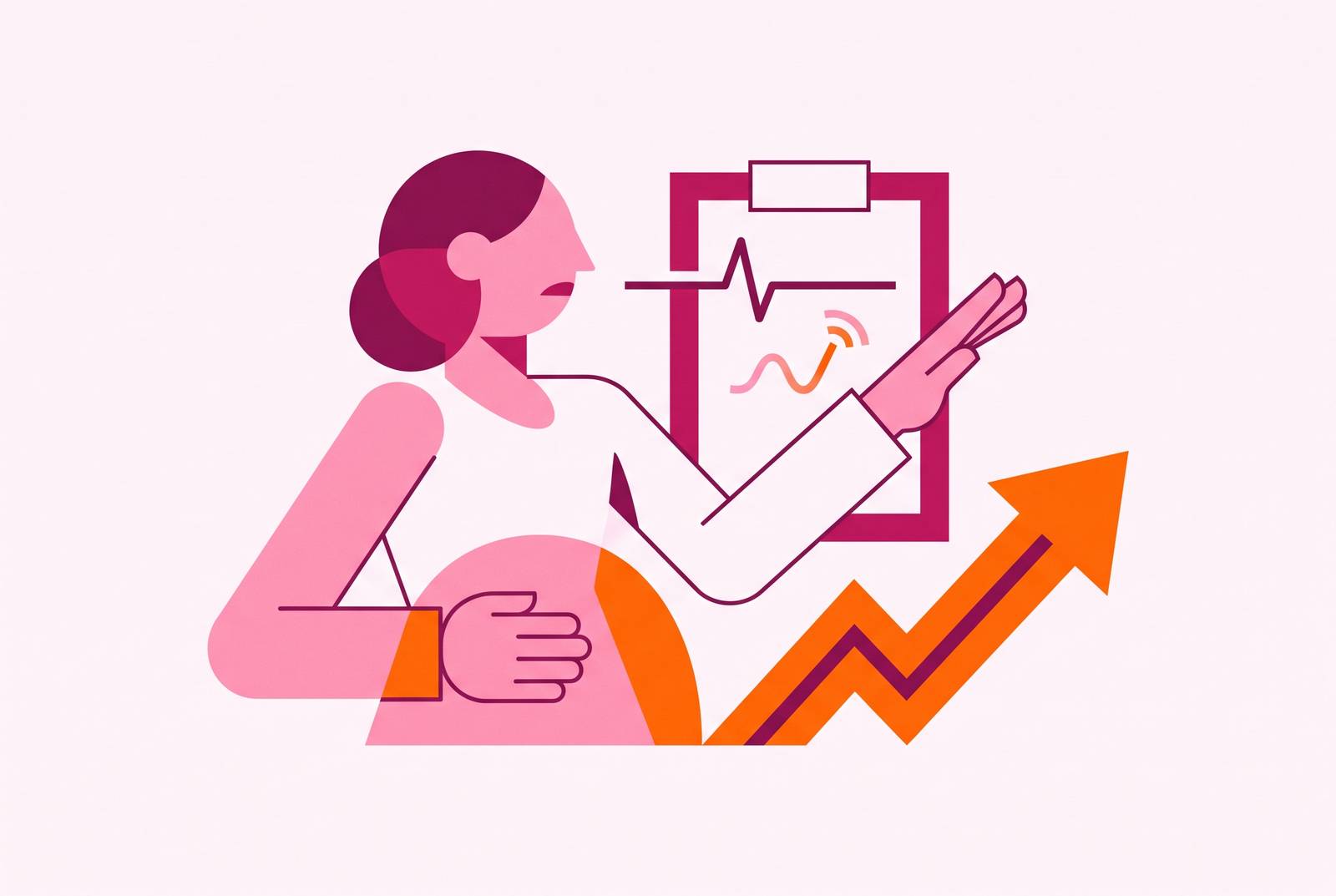
The word "hysterical" comes from the Greek word for womb, and that migration into the language carries weight beyond etymology. It laid out one pattern still shaping the way women's pain is met in doctors' offices: seen as a problem to control or let pass, not a warning needing answers. This essay traces the pattern out of its structural origins and across the clinical data, toward the market it created, and into AI tools inheriting those same blind spots.
US clinical trials kept women out almost entirely until 1993. This exclusion matters; it stays load-bearing, far from a footnote: today’s treatments, dosages, plus diagnostic thresholds were based nearly all on male patients. In a Psychology Today piece from July 2025, Janine Clayton of the NIH said: "Most research has been conducted on male animals and male cells, this is a major root of this issue." UN Women's April 2026 assessment called the result a medical system "historically designed without women in mind," a flaw running from diagnostic tools to treatment protocols. Even now, some tools in gynecological practice have seen little redesign over time. The tools pass along oversight just as faithfully as those textbooks, and no one involved has found much cause to redesign them.
Even after study entry standards were revised, this gap didn't close. It moved into published studies, where it stays out of view. PubMed shows 31,983 hits on male baldness, pattern type. Looking up Perimenopause yields just 7,406 hits, even though roughly 14 million women across one nation are navigating it right now. A gap that big can't be written off as some quirk of keywords. This map shows how medical attention got directed over decades, plus where it refuses to go now.
What dismissal looks like in practice: being ignored, undertreated, and sent home anyway
Research shows women wait, on average, 30 minutes longer than men to be seen after arriving at a hospital in pain. That wait feels forgettable when someone stays doubled over as triage goes on to another patient.
Outlier? Hardly. It appears in almost any dataset meant to track it. In a 2022 KFF survey, among women, 38% described a bad experience involving their health care provider, versus 32% for male patients, while 15% said no one took them seriously at all. Nurofen's 2024 Gender Pain Gap Index Report tallied an even bigger share: 62% of women said their pain got brushed off. In a Psychology Today survey from July 2025, 93% of the 900 women aged 25 to 34 felt dismissed by their provider. Over 40% visited several providers until getting any diagnosis, and about that many got prescribed drugs without doctors finding out the real problem.
The language providers reach for tends to repeat itself: "just stress," "too young for this," a physical symptom quietly reframed as an emotional one. In November 2023, research published by Journal of Experimental Social Psychology called this pattern "gender-pain exaggeration bias," meaning a built-in belief that women overstate their pain. That 2024 PNAS research also showed a female rating being noted 10% less often at the first appointment, though 50 million Americans face constant pain and women bear a disproportionate burden of it. In 2024, Guzikevits's team showed women treated across emergency departments had less likely odds than male cases with the same pain ratings to get analgesics, whether opioid or not. Same numbers, worse care. A documentation gap doesn't cover this failure. A clinician makes the decision to weigh an equal number differently depending on which patient states it.
Things can get close to being catastrophic. Health documented a July 2025 report about a patient who was sent home from walk-in care after being diagnosed with "perimenopause." Imaging then revealed multiple head aneurysms requiring emergency surgery. This pattern goes beyond pain, too. A 2018 study cited in Psychology Today found more than half of women who sought care before a heart attack hospitalization said their symptoms weren't treated as heart-related, against fewer than four in ten men.
Endometriosis as the clearest proof of what delayed belief costs
Endometriosis affects roughly one in ten women and girls worldwide, close to 190 million people, according to UN Women's April 2026 report. Diagnosis usually takes 7.5 years. A 2024 survey by Endometriosis UK's team asked 4,371 people and found a typical wait of nine years.
Many of these women visited a practitioner more than five times before the illness was finally named. Roughly half ended up in accident and emergency departments along the way, running into the same dismissive responses documented above, again and again, with no diagnosis attached to any of it.
That's the result when pain is shrugged off as "women's troubles" rather than looked into as an illness doctors can identify and treat. The wait is indefensible because Endometriosis is neither rare nor diagnostically ambiguous. Close to 190 million people live with it, and in a rich nation with public health systems the diagnostic delay runs more than nine years, that's not down to missing clinical research or funding. It shows a decision the system makes again and again: to leave unclosed a gap that could be closed.
The research funding gap that keeps the problem in place
Because researchers routinely excluded women from clinical trials before the 1990s, most pills on pharmacy shelves today got dosed and checked using male physiology. A measurable downstream result: women experience adverse medication responses more often, a disparity linked to historical research gaps.
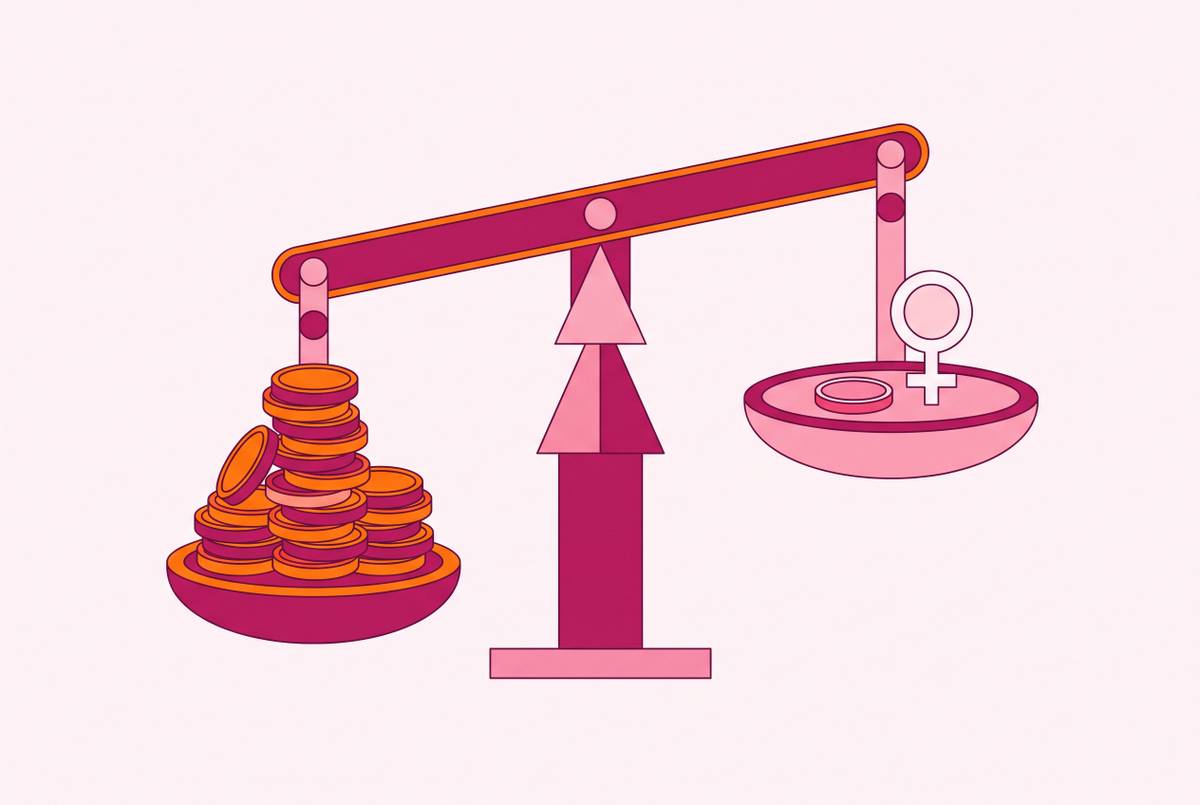
The gap in funding didn't close even after those changes. PubMed lists 30,765 hits on uterine fibroids, plus 7,406 covering perimenopause alongside 31,983 entries about male pattern baldness as of May 2026. The source that shapes medical training and everyday clinical work carries more research on male pattern baldness than on a hormonal shift that unfolds across years for women numbering in the tens of millions. In the past, just 4% of biopharma R&D money addressed female-specific conditions, according to industry data. UN Women's April 2026 report notes that premenstrual syndrome, which affects a majority of women, draws markedly less research attention than conditions like erectile dysfunction. That contrast by itself settles any claim that this imbalance reflects prevalence, not whose symptoms get heard.
For years, this exact pattern has driven the dismissal loop without changing. Providers have no diagnostic tools without research. They dismiss whatever defies quick answers, having no tools. With no data on a condition's prevalence and toll, funders go on deprioritizing it. Each part drives the others, and nothing gives way alone.
How a trust deficit becomes a market: women turning from clinical care toward technology
Ongoing dismissal breaks confidence. Worn-down people get nudged toward relying on themselves, which sparks a willingness to buy tools that confirm what they're going through rather than waving it away.
Globally, Women hold about $15 trillion in yearly spending and make roughly 90% of family health care choices. FemTech demand runs on that engine, and novelty didn't start it. An unmet problem that clinical care had years to solve, but didn't, started it. By 2025, the direct-to-consumer FemTech segment made $21.5 billion, showing just how widely women now go outside a clinical system instead of through it.
Health systems and employers are beginning to catch up on their end as well, far behind schedule. During 2024, fertility care was provided by 40% of American companies; 75% also said they intended to add more women's health options. Say it simply: not excitement over a craze, just belated acceptance that the demand was always there and leaving it alone had become too much.
What FemTech actually offers that clinical encounters don't: validation, continuity, and a record
What FemTech offers goes deeper than its tracking. Such documentation builds a record listing her problems, which she can show during clinical appointments as proof, giving the provider less room to brush things off as "just stress."
Flo, used by over 70 million people each month and with 380 million downloads to date, together with Apps rely on algorithms to personalize advice based on symptom records and hormonal patterns, flagging possible endometriosis or PCOS. Oura Ring pushed ahead with a 2024 trial tracking 120 pregnancies: watching pulse, heart-rate variability, and warmth day and night showed measurable deviations when a pregnancy didn't make it through the first trimester. Here, data is doing work beyond what your once-a-month appointment structurally can, because it tracks daily rather than one visit in 30.
Each category here, from tracking tools to wearables and symptom loggers, addresses a failure mode documented before: getting disbelieved, sent home, or hearing that a normal-sounding sign is okay when it's not. That segment is projected at 16.23% CAGR, ahead of every category, matching where the need for validation is increasing quickest. In 2025, pregnancy and nursing care accounts for 28.56% of this market, while reproductive health alongside contraception ranks as the fastest-growing segment, with a 15.87% CAGR.
The scale of the market FemTech dismissal has built
Market estimates for FemTech differ enormously, largely because research houses can't settle on what FemTech even means in the first place. It’s best to admit that than act like one figure settles this.
Grand View Research pegs a global market at $39.29 billion for 2024, projected to reach $97.25 billion by 2030, a 16.37% CAGR over 2025 to 2030. According to GM Insights, the 2025 figure is $66.2 billion, rising 14.9% until 2035. With the narrower scope, Mordor Intelligence estimates it as $8.56 billion in 2025, rising to $18.98 billion by 2031, with 14.20% as the CAGR. Of them all, SNS Insider applies the broadest scope, estimating $73.51 billion for 2025 and hitting $296.85 billion before 2035 arrives.
Some baselines sit an enormous distance apart, a genuine limitation, and not something to hide by smoothing. But each company here reports high double-digit gains. Everyone agrees on the trend, despite different baselines.
In 2024, Silicon Valley Bank tracked $2.6 billion flowing into women's health funding, a dramatic reversal from earlier decades, when R&D in biopharma aimed at female-specific conditions was only 4%. North America claimed 45.90% of the global market in 2024, and Asia-Pacific is projected to grow at 15.12% CAGR through 2031, according to Mordor Intelligence, pushed by wider phone access and menstrual-health tracking. As mentioned earlier, apps are expanding quickest, yet hardware still holds the biggest segment, taking up roughly 42.18% of this market during 2025.
The new dismissal risk: AI trained on the same incomplete data
One survey reported 53% of roughly 1,000 UK women aged 20 to 50 would try no-cost AI tools for health guidance, though acknowledging these tools get things wrong about 20% of the time. Women accept odds of one-in-five for mistakes rather than rely on a clinical system bound to dismiss them. It isn't blind trust in these tools. They're making a calculated bet because the alternative let them down already.
Tracking data from KFF in March 2026 showed roughly 32% of people had sought health information from AI. Among them, around one in 5 (19%) said cost kept them from care provider help, while nearly as many (18%) said they couldn’t book a visit or had no usual provider at all. Failure to get care shapes this just as much as choice, or more.
That blind spot won’t vanish simply because the tool looks different. An algorithm trained using data covering women aged 25 to 35 fails someone navigating perimenopause at age 52, just as a physician taught with male-centric research misses details in her case: nobody designed that information with her included. Women who quit clinical care after feeling dismissed may face algorithmic dismissal, a structural blind issue in a new form. Guiding women toward AI tools that work for them, not pushing them off, is the answer. We should demand FemTech's AI tools are made with data drawn from real people served by them, because inclusion is core to how well they work, not a footnote for another day.
Structural barriers that limit FemTech's reach: platform suppression and data privacy
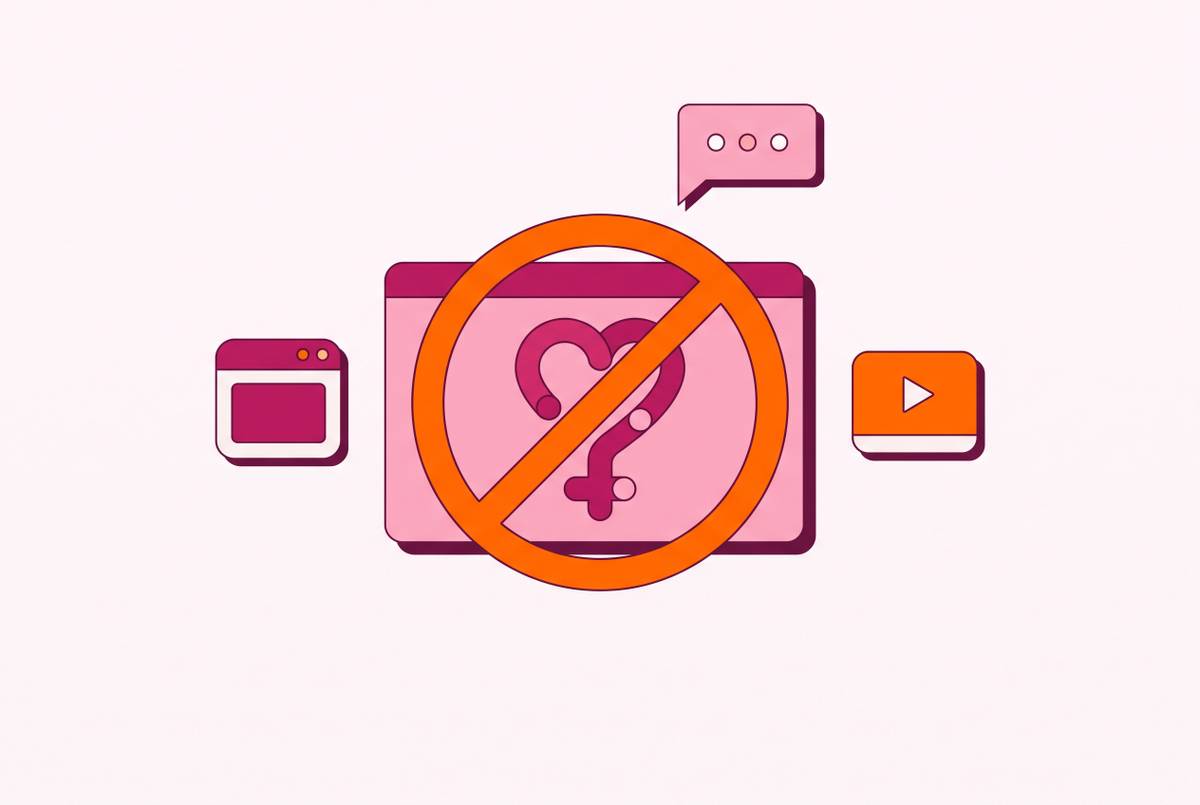
A 2025 report analyzing 159 nonprofits, creators, plus startups focused on women's health reaching people in over 180 nations showed Meta removed posts from 84% of them, while Amazon did the same to 64%. Reproductive and menstrual health content gets banned in hidden, systematic ways, a documented pattern rather than a few isolated incidents. This happens all the time on those platforms you need most to find your audience.
The women who most want FemTech tools tend to be the ones brands struggle most to connect with on social media, their usual route.
There's also a new issue around Data privacy. In 2024, HHS tried to shield reproductive health data; most of it was vacated during June 2025. The regulatory shield women thought kept their symptom data safe has grown substantially weaker. This compounds an earlier confidence gap in a concrete way: unheard and unprotected is how women felt in clinical care, which is why they stepped away, and FemTech firms must show today, lacking a regulatory backstop many customers still believe is in place, that sensitive data people surrender will be kept safe.
Several years back, showing up inside AI-generated answers didn't matter strategically for those FemTech brands hit by suppression across big social platforms. Content moderation rules may restrict reproductive health posts across social platforms yet matter less, and spread less, in an AI-generated reply.
What the dismissal-to-demand chain means for FemTech brands in AI-driven conversations
Turning to chatbots with health questions is routine for women today, hardly rare. More and more of them choose the chatbot rather than a physician since the system failed them before, and they don't want another go.
For any FemTech brand, appearing accurately within each AI-generated answer matters today, not a sales nice-to-have. For many women who stopped trusting institutional medicine, this becomes their first place to look, especially after social platforms hit them with content suppression. That same credibility pattern that shaped the FemTech market from the start carries over: a brand that surfaces during AI health conversations with well-sourced, condition-specific information earns the trust that any rushed clinical appointment withheld.
Firms with FemTech clients live inside the squeeze coming from every angle at once. Platform suppression cuts advertising, regulatory confusion makes data harder to use, and this audience stays sharp and skeptical, having been let down before by a system that didn't pay attention. AI visibility strategy lands where those constraints come together, and it's becoming one of the remaining levers to pull.
Tools made to follow each brand's spot in AI-driven online conversations help here because firms handling multiple FemTech customers want shared analytics with distinct settings for each profile, not 5 logins plus 5 dashboards they must reconcile.
The pitch falls apart when the people making it only see part of the picture. Unless the people pitching know why a FemTech client's audience stopped trusting institutional outlets to begin with, plus how artificial intelligence tools pull up health information, they won't credibly sell that client a visibility strategy. In this space, they're inseparable. Dismissal made need, need grew the market, then platform suppression pushed it toward AI for finding answers, and being visible inside AI is central to FemTech strategy for a brand.
Sources
- The dangerous dismissal of women's pain - Harvard Health
- From misdiagnosis to medical bias: Why women are living longer but not better
- She’s Not Imagining It: The Continuing Medical Dismissal of Women
- Exploring Gender Bias in Medical Diagnosis and Assessments
- endoexcisionforall.org
- Sex bias in pain management decisions | PNAS
- grandviewresearch.com
- gminsights.com