Why FemTech Products Struggle with Long-Term User Retention
Singular focus on solving one problem leaves users with nowhere to go once it's solved.

FemTech expands quickly, yet sheds users almost as quickly; these are two sides of the same story. ScienceDirect’s 2023 research showed almost 40% of users had ditched their app or stopped logging. Most FemTech products are designed to solve a moment, not last a lifetime, and it's this design that drives users away, not poor marketing.
How FemTech products are built around moments, not relationships
Consider the job most FemTech apps are actually hired to do. People download cycle-tracking apps to avoid or achieve pregnancy, or to understand confusing symptoms. Eventually, one of three things occurs: she gets pregnant, delivers a baby, or her question is answered and no longer feels pressing. It's finished. The app usually then has nothing more for her, a detail growth decks often overlook.
A woman’s health journey spans her first period to fertility, pregnancy, childbirth, perimenopause, and menopause, years of changing, layered needs. Most products focus on just one stage and stick with it. Natural Womanhood's product comparison study points out the technical reason: an algorithm designed to prevent pregnancy won’t help with conception, and it’s not much use for a 51-year-old tracking hot flashes. Expecting one model to juggle three conflicting goals is like demanding a single GPS route take you to and from the airport simultaneously.
Once the goal is met, the user doesn't move on to another level in the app. She leaves, because there's nowhere else to go. But other categories retain users, often by chance. A bank app still helps after you clear a debt, and a fitness tracker keeps working when you set a new record. FemTech largely trips over this same issue: acute, single-purpose products are quicker to build and easier to sell to investors, but they pack all the engagement into a short period and leave nothing when it's over.
What peer-reviewed drop-off data actually shows
The ScienceDirect number includes a given reason, and that reason is more important than the main figure. Of those who left, 41.1% blamed inconsistent use, while 16.3% cited inaccurate information as their main reasons. Combine these two reasons, and you quickly see the cycle: users log in less, predictions weaken, trust drops, logins decrease further, and predictions suffer more. Everyone stuck in that cycle gets a degraded experience, worse than what they originally joined for, even those who didn’t plan to leave.
That loop is the mechanism worth sitting with, more than any quality score that follows it. These three apps get most of the installs, but none has over 9% of the total market. It's easy for a user to switch apps if she's unhappy with her current one, just by reading a single App Store listing. Retention here isn’t about filling up an acquisition funnel. The issue is poor product quality, leaving users free to leave, and no marketing budget can fix a system designed to let them go.
Why privacy concerns have become a direct churn trigger, especially in the US
Add a second exit door: privacy. FemTech health data isn’t covered by HIPAA in the U.S. and a 2024 CHI Conference study shows it’s still unclear if it qualifies as GDPR "special category" data in the UK and EU. That study, a 183-participant vignette survey, found people deeply worried about law enforcement and third-party access to their data, but feeling limited in their ability to act.
Then Roe v. The overturning of Roe v. Wade in 2022 was followed by Duke/CHI research showing just 9% of surveyed women took a protective measure, such as deleting a period-tracking app. That’s a tiny share. But multiply it against a user base like Flo's, which has attracted more than 250 million users globally, and a small share of a very large number is still a lot of people quietly walking away, most without switching to a replacement. Users aren't just going to another app. That’s people leaving the category for good, and it’s riskier since no competing app can pull them back.
It's a real fear, too. Reports indicate that app data on reproductive health could pose risks for users ending a pregnancy or coping with loss. Of the 25 popular period and pregnancy apps Mozilla reviewed, 18 got a "privacy not included" warning. Removing the app doesn’t always stop the exposure: Some apps retain inactive user data for years, and many apps use third-party trackers that share data for ads. Once privacy trust is lost, it doesn't recover like trust in a product's functionality does. Improve the interface, and users may return. Fix a data leak, and users have already lumped your app in with the rest of the untrustworthy bunch.
The censorship trap: how platform ad restrictions distort who enters the funnel
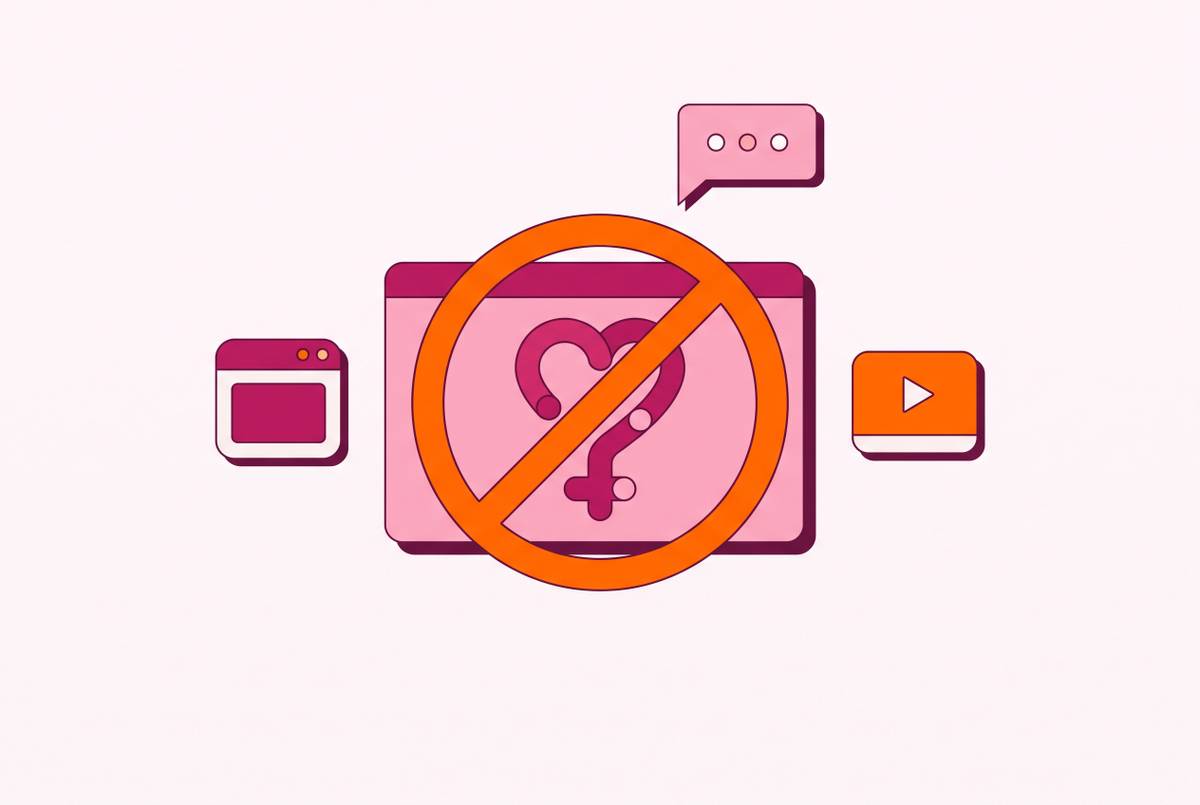
FemTech companies often struggle to show ads for their products to curious, uncommitted users, a detail most retention discussions entirely miss. According to a 2024 CensHERship report, 95% of 95 respondents, including brands, creators, medical professionals, and charities, faced censorship issues on at least one of Instagram, Facebook, TikTok, YouTube, X, LinkedIn, or Google.
These problems are real, not imagined. HANX’s Meta account was suspended for six days in December 2024 and only restored after a co-founder used a personal contact at the company, which isn’t a practical way to handle customer support. Bea Fertility’s content was blocked for using anatomically correct terms. Google blocked Daye's ads for diagnostic tampons under its "birth control, fertility, and testing" policy, even though the product didn't clearly belong there. Even in 2025, HerMD and Wisp were shut down for using common terms like "menopause" or "sexual health."
Tracing this to retention, the link quickly strengthens. If paid, top-of-funnel advertising keeps getting blocked, companies lean harder on organic channels, which mostly reach people who already know what they're looking for. The funnel favors users with a pressing need, like conception or a specific symptom, and neglects the more casual user who might've formed a lasting connection with the platform if she'd discovered it sooner. A brand unable to clearly explain its product in paid ads misses the woman who isn't in crisis, the very user who might have stayed loyal.
How a thin evidence base erodes long-term trust in the product
FemTech gets a tiny share of health R&D cash, and of that, 75% goes to fertility and pregnancy, per UK-CPI research. Menopause affects a significant portion of the population, yet it receives only 0.55% of FemTech funding. The market opportunity is oft-quoted. The science behind it doesn’t come close to matching the number, and that difference deserves more attention than the market size itself.
This shortage stems from a clear past exclusion: Before 1993, women were often excluded from clinical trials, leaving significant gaps in health data. FemTech startups are now building predictive products despite this gap, and that's having real consequences. A review published by PMC highlighted risks associated with inaccurate app advice. This isn't just a theoretical risk on paper. It's a genuine mistake affecting someone's life, and one big blunder can harm the whole industry, not only the company at fault.
The problem for retention is clear: chronic conditions like pain, autoimmune diseases, and endometriosis, which takes 7.5 years on average to diagnose, get far less FemTech research focus than fertility, despite being the ones most likely to keep women engaged long-term. Much of FemTech R&D funding focuses on fertility and pregnancy, leaving chronic conditions with fewer evidence-backed tools. Those who stay beyond the first issue usually have a long-term problem, but the science-backed content for them is thin.
How cultural stigma silences the word-of-mouth engine retention depends on
People openly discussing fitness apps and meditation apps is something FemTech doesn't usually get. Ongoing taboos about menstruation, reproductive care, and sexual wellness stop those talks from happening, which hurts both how legit these products seem and the word-of-mouth that usually spreads them. People don't talk about period trackers at dinner like they would a new running app.
Stigma also reduces word-of-mouth, though. It also reduces the data these apps need. If users avoid noting personal symptoms thoroughly, the data gets weaker, leading to poorer predictions and feeding back into the churn problem mentioned before. Most product plans never account for how stigma and poor data get all mixed up.
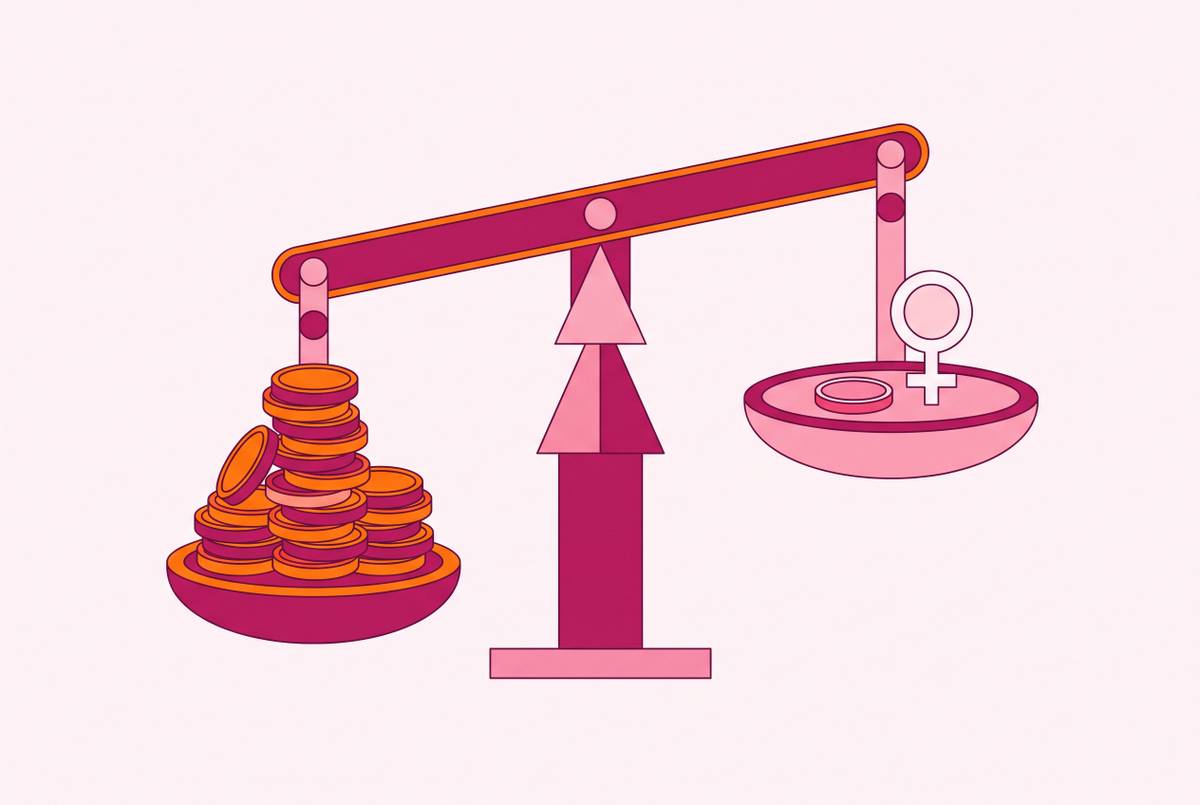
The same pattern holds for money, and it's worth saying so directly: having 8 FemTech unicorns in 2024 is taken as proof that the stigma is gone, but that's a misreading. FemTech startups get under 2% of all VC investment. Investor squeamishness about menstruation and menopause persists, just masked as portfolio discipline rather than outright discomfort. Menopause, sexual wellness, and chronic pelvic conditions face the most stigma but also offer the best chance for long-term user commitment. Stigma isn't some harmless old custom. It's making money bypass the exact applications that would solve the retention problem we keep discussing.
What closing the retention gap actually requires
Most fixes suggested to boost retention in this category are superficial, and it's worth saying that upfront before discussing real solutions. A nicer welcome message and gentler alerts won’t fix what’s fundamentally broken. Seeing completion of a full cycle log as the real activation, not just the download, and tailoring lifecycle messages to the user's goal (conception, cycle tracking, symptom management) is smarter because these users act very differently and one notification plan won’t cover them all. It's a genuine, measurable solution. It's also a small one relative to the size of the problem it's being asked to solve.
The solution is creating one product that supports a woman through every stage, from periods to menopause, in a single, ongoing experience, instead of six different apps all chasing the same six months of attention. Making smooth life stage handoffs isn't simple. Yet it can be done, while holding onto users who’ve lost their only reason to log in is not.
Privacy shouldn't just be a legal formality, it should be a visible feature: minimizing real data, clearly disclosing third parties, and using on-device processing when possible. Investing in research on chronic, long-term conditions creates trust that keeps a user engaged after her initial urgent need is met. Community design matters too. A reliable platform lets users discuss topics stigma hides, creating word-of-mouth buzz it would miss otherwise. Ongoing education about all life stages keeps users engaged long after their first question is answered.
Each part on its own isn't hard. The real challenge is doing all this at once, since the sector is still funded and built as if users only have one question then vanish. To close the retention gap, we need to build apps that are useful to women at any time, not just during a health crisis, and right now, that's not how most FemTech apps are built.